A Study on the History of the Communist Party of China: A New Probe into the Student Movement in Guangzhou during the May 4th Movement under the Guarding Military Government.
The May 4th Movement, which broke out in 1919, is an event with great influence in the modern history of China. No matter whether it is given meaning from the perspective of revolutionary history or explained from the category of cultural history, the relevant research results can be described as overwhelming, but the research focusing on the May 4th Movement itself has become unpopular. Although the May 4th Movement began in Beijing, its influence soon spread to most parts of the country. Since the 1980s, the party history departments of various provinces and cities have compiled a number of works and data sets with the theme of "May 4th Movement in a certain place". However, these achievements generally follow the idea of taking this place as the "projection" of the May 4th Movement in the national sense, with little difference in content except the names, places and time. Under the historical view of the revolution, the great historical significance of the May 4th Movement, as a watershed of the new and old democratic revolution, often obscured its rich local characteristics and connotations.
In recent years, some researches on the May 4th Movement from the local field began to appear, and the research idea of "May 4th Movement in a certain place" showed a trend of transformation to "May 4th Movement in a certain place". However, most of the existing achievements focus on the "May 4th New Culture Movement" in a broad sense, focusing on its localization characteristics in the sense of cultural history. In fact, as far as the skills of the May Fourth Movement are concerned, there are also local contents that are difficult to cover under the "national", which still has a lot of room for study. Since Sun Yat-sen set up the Guardian Military Government in the south in 1917, the "whole country" in the political sense has been divided into two parts. As the political center of the Guardian Military Government in the south, Guangzhou is not under the jurisdiction of the same government as Beijing and Shanghai in politics. The great political situation of the north and south governments and the small political situation of various factions within the military government, one country, three publics, all had a great influence on the behavior of Guangzhou students during the May 4th Movement, resulting in various complex aspects that were divorced from the May 4th tide, which have not been fully reflected in the existing research.
Compared with the predecessors who studied the May 4th Movement in Guangzhou in the 20th century, the current research conditions have been greatly improved, and there are many new materials available. Although the local newspapers in Guangzhou were hardly available during the May 4th Movement, the "peripheral" newspapers that published a lot of Guangdong news, such as Hong Kong Huazi Daily, Changsha Ta Kung Pao, Yunnan Diansheng and Singapore La Pao, were available. Some mimeographed historical materials compiled in 1950s and 1960s, such as Guangzhou Gonghe Newspaper and Series of Provincial Students’ Federation, which were not fully utilized by academic circles, and unpublished oral history materials, such as the interview with Luo Zongtang, enriched our understanding of the May 4th Movement in Guangzhou. The newly published British intelligence archives of Guangdong Customs, the information and telegrams kept by Japanese intelligence agencies in Guangzhou during the May 4th Movement, etc., also provide historical facts that have not been noticed by predecessors. All these make it possible to deepen the study of the May 4th Movement in Guangzhou. This paper intends to learn from the research theory of "New Revolutionary History" that attaches importance to the reaction of mobilized objects, and explore the locality and complexity of the student movement in Guangzhou during the May 4th Movement, with a view to enriching the overall historical research of the May 4th Movement.
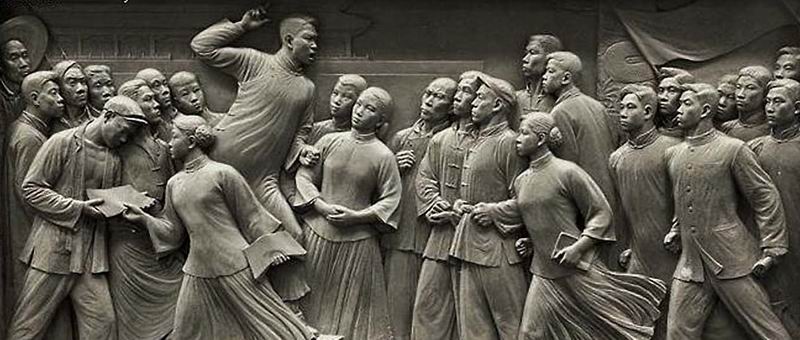
May Fourth Movement
First, the calm in the enthusiasm: the reaction of the provincial capital student union at the beginning of the May 4th news.
Generally speaking, large-scale student unions all over the country were established after the May 4th Movement, but the first-class student union in Guangdong was established earlier. In May and June, 1918, in the joint action against the "Sino-Japanese Secret Agreement", Guangzhou students set up a city-level student union, which was named "Guangdong Provincial Capital School Student Union".
In 1918, after the news that the Beijing government and Japan signed a traitorous treaty, such as the Sino-Japanese Army Joint Defense against the Enemy, Japanese students studying in Japan returned to China to organize national salvation groups to preach the traitorous behavior of the Beijing government and the crime of Japanese aggression. Qiu Niantai, a Guangdong student studying in Japan, "knew that he would have to repeat the grade if he dropped out of school again, but he was angry at the fact that the country was a Japanese right and wrong, so he was unable to keep quiet and took part in a collective strike." Later, he was elected as the propaganda representative of returning to Guangdong by the Guangdong Association of Students Studying in Japan. Seven people, including Qiu Niantai, He Chunfan, Huang Bingwei, Chen Yanjiong, Tang Xinian, Zhang Qiaowu and Fan Qi, returned to Guangzhou in May, and contacted student leaders such as Li Pusheng, Liang Hancao and Zhang Qirong, and with their help, they set up a Guangdong student salvation group to carry out anti-Japanese propaganda work. In order to further strengthen the momentum, students from Lingnan University, Guangdong Normal University (hereinafter referred to as "Guangdong Normal University"), Guangdong Public Law School (hereinafter referred to as "Public Law School"), Peizheng Middle School, Peiying Middle School, Nanwu Middle School and No.1 Middle School each sent three representatives to a meeting in Guangzhou Qiongya Society on May 30, and decided to send people to each school to seek greater joint action.
On June 5th, more than 100 student representatives from various schools in Guangzhou gathered in Dongyuan. At the meeting, a representative proposed to change the name of the Salvation Corps to "Students’ Union", arguing that the word Salvation Corps was "slightly political, fearing government interference". Moreover, this club should be a permanent map. If it is named as "Salvation Corps", it will not exist after the refusal. However, the case was resolutely opposed by representatives of public law and politics and the first middle school. They think that all schools and departments come from refusing to make an appointment to save the nation, and the name of "Students’ Union" makes people unknown so, so they should take "refusing to make an appointment to save the nation" as their mission and do not need to change their names. The two sides argued and finally had to put it to the vote. A total of 36 school representatives attended the meeting, of which 34 were in favor of changing the name. Therefore, the meeting finally decided to set up the "Provincial Federation of Students", and elected Guangdong Normal University as the president unit and Lingnan University as the vice president unit.
The Provincial Federation of Students was renamed from the National Salvation Corps because it didn’t want to be too political. Therefore, after its establishment, the Federation has always held a "stay at a respectful distance from others" attitude towards politics. As Wu Rongxu, a member of the association, said, "Politically, it is beyond the reach of the student community, and it is not suitable for students’ time." As for education, the Chief Executive of Education and the Education Association will do it, "and the student community of young people should not take over." Therefore, the association takes advantage of its leisure time and homework to mainly engage in "holding popular speeches and running civilian weaving schools" and other things. In March 1919, when the Provincial Federation of Students made plans for the future, it still emphasized that "the bounden duty of students lies in mechanics", and "therefore, this association was established to serve the society on the one hand and to study academics on the other". At the same time, after its establishment, the association paid great attention to establishing good relations with the Chief Executive of Education and the Education Commission. It not only hired celebrities from the education sector as honorary presidents or consultants at that time, but also wrote to the head of the education department to explain that the meeting of the association was "on the right track and not slightly extreme", and at the same time assured the education department that the establishment of various ministries was "purely educational in nature, with no political connection, and only used their spare time to coordinate social undertakings". As soon as the articles of association, ten-day report, monthly report and other publications are compiled, they will be sent to the education department of the provincial department for filing and investigation, which can be described as cautious.
On May 4, 1919, after the news of the arrest of patriotic students in Beijing came, the Provincial Federation of Students responded quickly. On May 7, it called the Jiangsu Education Association, condemning the Beijing government for "not forgiving the patriotic enthusiasm of students" and "destroying it for the convenience of one department at a time". Judging from the text of the telegram, although the provincial students’ association deeply hates the Beijing government’s behavior of destroying students, it also thinks that Beijing students "have something to do with what they have done", and puts forward that the provincial education associations should do their duty of "helping and guiding", and then expresses the hope that the Jiangsu Education Association and the provincial education associations will "work together". Although the provincial students’ union expressed full sympathy for Beijing students, it also implied some criticism. They suggested that the education committee should "figure it out", indicating that they had reservations about students’ "self-determination" behavior. The attitude of the Provincial Federation of Students to the May 4th Incident continued its consistent view on the relationship between students and politics, which also set the tone for the Federation to deal with the May 4th Movement.
On May 11th, under the contact of the Guangzhou Diplomatic Support Association, all walks of life in Guangzhou held a national conference. "The academic circles were particularly enthusiastic, and all the slightly famous schools came." This shows that Guangzhou students are eager to be patriotic. However, judging from the explanation issued by the Provincial Federation of Students on the 23rd, the active participation of middle school students in the National Congress was not the result of the mobilization of the Provincial Federation of Students. As it was Sunday, this undoubtedly reduced the resistance of the student assembly. On the 17th and 18th, it was also the weekend. The Provincial Federation of Students organized a rally in Dongyuan Square, and sent teams to nearby Foshan and other places to give speeches on diplomatic issues and resist inferior goods. Most of these activities are held on weekends or after class, and the scale is not large. There is even no "one-time gathering" to express "the idea of being firm and strong". At that time, it was already "scattered" and the association was "suddenly thinking" and only on May 23 issued a call to convene a gathering of students from all schools.
On May 25th, students from various schools in Guangzhou, under the contact of the Provincial Federation of Students, took a seat in Guangdong Normal University to discuss "the way to save the country". On that day, students from more than 50 schools in Guangzhou attended the conference, with a total number of more than 5,000 people. In addition to students, some school principals also attended. After public discussion, the conference passed ten resolutions, such as electrifying the Paris Peace Conference, striving for Qingdao, retaining Cai Yuanpei, organizing a student tour, organizing an investigation of inferior goods, and "contacting the National Lawyers Association to prosecute traitors". Comparatively speaking, these ten resolutions are still in an orderly framework. Especially when Beijing, Tianjin, Shanghai and other places have called on the Beijing government to punish Cao, Zhang and Lu by striking classes, Guangzhou students still propose to take legal prosecution against them, which is very restrained and calm.
Although the Provincial Federation of Students passed ten resolutions, how to make the resolutions and by whom need further discussion. Therefore, the general assembly decided that each school should give a representative to stay and continue the meeting, and the principals of Guangdong Normal University, Lingda University and Nanwu also reserved seats among them. There is no direct written report on this small meeting, and Huang Shaosheng who participated in it has detailed memories. According to this statement, there are differences among the representatives of various schools on how to save the country: Li Pusheng, then chairman of the Provincial Federation of Students and a student of Guangdong Normal University, advocated "saving the country by mechanics" and advocated peaceful action, which should not be extreme, and representatives of Lingda, Peiying and Nanwu all agreed; However, student representatives from public schools of law and politics, public medicine, and A-class industry rose up and refuted. They thought that "saving the country with empty words would not help" and should strike classes and carry out practical struggles. The two sides argued fiercely and were deadlocked. He Jianwu, the headmaster of Nanwu Middle School, saw this situation and persuaded him that students "should study to save the country and not neglect their studies", but it was not accepted by the fierce students. In the end, the fierce students quit in anger, saying that they went their own way and "the meeting was fruitless" and broke up.
The fierce students who left in anger did not immediately form a new organization. They wanted to engage in practical struggle and needed to reorganize their contacts. In the next few days, under the leadership of the Provincial Federation of Students, Guangzhou students successively carried out activities such as electrifying Cai, organizing student tours, mourning Guo Qinguang, etc., in accordance with the ten resolutions of the General Assembly on the 25th. There was no drastic or deviant move. On May 30th, some violent acts occurred in Guangzhou, such as cutting straw hats of passers-by (at that time, straw hats were mostly made in Taiwan Province and regarded as Japanese goods), smashing the glass and signboard of Laowei Pharmacy (Japanese medicine shop), and entering Daxin Department Store to inspect Japanese goods, which led to a wave of smashing. Although "students dressed in costumes" also participated in it, it was later proved that all of them were hired by people with ulterior motives to pretend to be acts, which had a bad influence on the academic reputation. Therefore, the Provincial Federation of Students issued a leaflet in the name of the student assembly the next day, calling on compatriots to "abide by the rules and maintain order".
On May 31, when the provincial students’ union held its anniversary celebration as if nothing had happened, students of Sacred Heart School run by the French announced that they would all go on strike because they were dissatisfied with the school’s ban on their participation in the students’ union and making patriotic remarks. However, the Provincial Federation of Students didn’t intervene too much. It was not until June 3 that the students of the school were invited to have a tea party. The response was only to suggest that the students of the school set up another school on their own, and there was no more action.
Generally speaking, at the beginning of the May 4th news, although the reaction of the provincial students’ union was enthusiastic, it was very calm and restrained, and its consistent philosophy was not adjusted because of the May 4th movement. It is no wonder that when the student representatives from Beijing, Tianjin and Shanghai arrived in Guangzhou, they felt that the atmosphere in Guangzhou was "far from expectations", and even condemned it as "Qingdao’s survival means Shandong’s survival, that is, China’s survival, and we cannot ignore the disasters in neighboring provinces".
Second, the division of the provincial students’ union: the escalation of students’ differences about the strike in Guangzhou
Although the Guangzhou Students’ Conference ended in discord on May 25th, what the students on both sides were arguing about was only the abstract patriotic way, without a specific focus. The so-called "fierce" and "peace" are just relative concepts. Although the fierce students criticized each other for "saving the country with empty words", their "actual struggle" did not start immediately. It was not until the representatives of the Beijing-Tianjin-Shanghai Federation of Students arrived in Guangzhou and called for a unanimous strike that the differences between the two students began to materialize. Whether to respond to the unanimous strike of Beijing-Shanghai students became the focus issue, which eventually led to the division of the provincial Federation of Students.
The student representatives from Beijing, Tianjin and Shanghai are Fang Hao, a student from Peking University, Yang Xingxia, a student from Tianjin Institute of Technology, Gui Zuogang from Fudan University and Zhong Zhen from Soochow University. The four students gathered in Shanghai and arrived in Guangzhou on June 5 accompanied by Wang Shucheng, a Shanghai newspaper federation. Perhaps because of Wang Shucheng, the four people first attended the welcome meeting hosted by the Guangdong Press Association after arriving in Guangzhou. The four men sailed south from Shanghai on May 28, and the Shanghai Federation of Students announced a strike on May 26, and clearly stated that "it is the only duty to ask the government to punish the traitors". Therefore, the four people said in their speeches that the purpose of coming to Guangdong this time is to unite with all walks of life in the Guangdong Provincial Journal of Industry and Commerce to "get rid of traitors and retain President Cai". At 4 o’clock after the speech, the four people rushed to Guangdong Normal University to contact the Provincial Federation of Students.
There is no direct report on the meeting of student representatives from Beijing, Tianjin and Shanghai in the provincial capital Federation. According to Jin Zengcheng, then president of Guangdong Normal University, some students in Japan were encouraged by the "Four Represents" and expressed their support for concerted action with the academic circles in Beijing, Tianjin and Shanghai. At the same time, due to the frequent news of students’ strike in Beijing, Tianjin, Shanghai, Jiangsu, Zhejiang and other places, Guangzhou students are also moved. At this time, all walks of life in Shanghai have decided to jointly launch a strike movement because of the Beijing authorities’ massive arrest of students, demanding that the Beijing government punish Cao, Zhang and Lu traitors, and said: "As long as traitors exist, the business and academic circles will drop out of business for one day, and they will never look back." As pointed out by later researchers, the goal of overthrowing traitors is clear and simple, "and clear and simple is most suitable for people’s mobilization and manipulation." As a matter of fact, the "Three Strikes" movement in Shanghai did win enthusiastic response from people from all walks of life under the banner of "punishing traitors", and news of strike movements in various places came one after another.
However, people in Guangzhou’s industrial and commercial circles under the tutelage military government are not enthusiastic about this. Since Sun Yat-sen established the Guardian Military Government in Guangzhou in 1917, there has been a political situation in which the two governments are opposed to each other. Guangzhou is under the Guardian Military Government and is not under the jurisdiction of the same government as Beijing, Tianjin, Shanghai, Jiangsu and Zhejiang. Therefore, the call to the hostile government to punish its officials through the self-destructive way of strike has not caused waves in all walks of life in Guangzhou. The Guangdong authorities were not worried about strikes or strikes in Guangzhou. The only concern of Wang Zhai, then governor, was that the student community would respond positively. Therefore, he instructed the Education Section of the Governor’s Office to convene a meeting of principals of various schools in Guangzhou to discuss countermeasures.
From the point of view of the ruling party, students’ strike is different from activities such as assembly, petition, procession and speech. The latter are mostly controllable and orderly behaviors, but once students strike, their actions will be difficult to restrain and will inevitably hinder local order. People in the education sector do not quite agree with students’ strike behavior from the perspective of cherishing their studies. Therefore, most provincial authorities and educators do not want local students to strike, but students who are motivated by national justice are often hard to listen to. However, the situation of students in Guangzhou is very different.
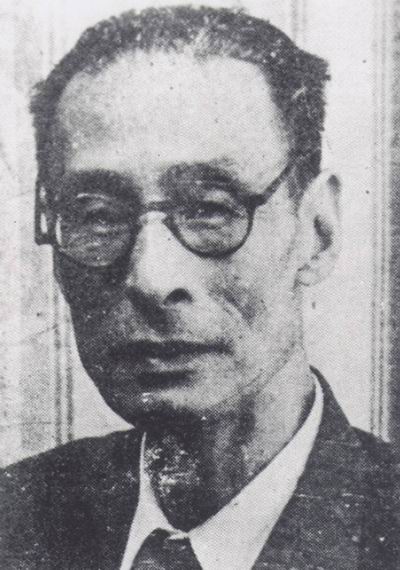
Jin zengcheng
On June 7th, Zhu Nianci, Chief of Education Section of the Governor’s Office, and Jin Zengcheng, Vice President of Guangdong Education Association and President of Guangdong Teachers’ College, jointly invited the principals of provincial capitals to hold a talk meeting to discuss how to deal with the unanimous strike of students from Beijing, Tianjin and Shanghai. At the meeting, Yao Lixiu, the dean of the public school of law and politics, pointed out that the strike was harmful and useless. The students in Beijing, Tianjin and Shanghai’s strike was "nothing more than threatening the Beijing government", but Guangdong "is still in an independent era, and it is indifferent to the Beijing government, and the North Court is just as fat and barren as Qin Yueren", so it is considered that Guangdong Province does not need to take the same action. Other principals quite agree with this reason. He Jianwu, the headmaster of Nanwu School who attended the 25th student meeting and persuaded the fierce students to be ineffective, further pointed out from the operational level that if he directly negotiated with the provincial students’ union, "those who are full of enthusiasm may not be easily moved", so he put forward the method of "breaking schools one by one", "Each headmaster will go back to the school and explain the facts to the students, so that it is easy to maintain the effect".
Persuaded by school principals, some students who originally planned to strike began to change their attitudes. For example, when the students of Guangdong Provincial Women’s Normal School first felt the trend of striking classes, they were "not without turmoil", but after the principal explained the position of Guangdong Province, they realized that they could not easily go along with it and had set their minds at ease to study. The leadership of the Provincial Federation of Students originally advocated "saving the country by mechanics" and did not want to act violently. Therefore, it is not so much the persuasion of school principals that makes them change their attitude, but rather the rhetoric of school principals provides them with an excellent reason not to strike. On June 7th, representatives of the Provincial Federation of Students (excluding the fierce students who withdrew) gathered in Guangdong Normal University. When studying whether Guangzhou students and students from Beijing, Tianjin and Shanghai went on strike in unison, most of them held opposing positions. In the "special knowledge" of not striking classes published in the newspaper the next day, they emphasized that "the purpose of striking classes in Beijing and Shanghai is to require the exclusion of Cao Zhang, who is an independent province in Guangdong and has divorced from the relationship between the Beijing government. Cao Zhang, a thief, is not the foreign minister and Japanese envoy of our southwest law-enforcement government, and has nothing to do with our law-enforcement province, so our Guangdong students need not stop learning from the requirements of the Xiang Jing government", so they just need to denounce it. Therefore, the case of responding to the Beijing-Shanghai students’ strike was not passed in the Provincial Federation of Students.
However, words are divided into two ends. Another group of students began to contact around after they indicated that they wanted to go their own way at the student meeting on May 25th. The representatives of Beijing and Shanghai students who went south to strike in series undoubtedly provided a good opportunity for them to carry out "actual struggle". Although the Provincial Federation of Students has issued a statement not to strike classes, the fierce students do not obey. On June 10th, under the leadership of Ruan Xiaoxian, Zhou Qijian and others, students from Class A industrial school took the lead in announcing the strike. Then, students from more than ten schools, such as public law and politics, Jiaozhong Normal School and Panyu Middle School, also announced all the strikes on the 12th. On the 12th, some students from Guangdong Normal University, the president unit of the Provincial Federation of Students’ Associations, issued leaflets calling for "saving the country without striking classes" and announced that the whole school would strike classes at 1 pm that day.
As far as the institutional nature of the Provincial Federation of Students is concerned, it is only the liaison organ of each school, and whether each school joins or not is entirely voluntary and not mandatory. During the May 4th Movement, the large-scale students’ joint organization was "only a loose combination, lacking the authority to act together". Moreover, these organizations can’t restrain their members from carrying out the resolutions, which is also the embodiment of the plight of the student union as a "consortium" organization. On the issue of strike, Guangzhou students are divided into two camps, even among students in the same school, there are different opinions. When making leaflets and issuing notices, the students who went on strike often signed "all the students in a certain school", but in fact they did not really represent all the students. For example, Li Pusheng, a student in Guangdong Normal University, is the chairman of the Provincial Students’ Federation and also the main opponent of the strike. It is obviously an exaggeration to say that the students in the normal university have "all gone on strike".
After some students in some schools announced a "general" strike, the student community in Guangzhou has obviously split into two forces. Some schools that violate the general will of the Provincial Federation of Students did not declare their withdrawal from the Provincial Federation of Students at first, and they even acted in the name of the Provincial Federation of Students. Therefore, in order to prevent "calling all schools to hold a strike meeting in the name of this association", the provincial capital students’ union sent an urgent letter to the press, reiterating that its opposition to the strike has not changed, and escalating the reason to the political level, proposing that "the strike is an internal problem, and demanding it is to recognize the Beijing government, and it is really impossible to expect it". At this time, the case of Li Yaohan, the former governor of Guangdong Province, "Tongbei" is affecting the situation in Guangdong Province. The provincial student union will link whether to strike with whether to recognize the Beijing government, which means politicizing the differences among students. In this case, it is logical and inevitable for students who strike to seek a new stove, and the representatives of the Beijing-Tianjin-Shanghai Federation of Students played a catalytic role in it.
At the beginning of the series of student representatives from Beijing, Tianjin and Shanghai, although they were warmly welcomed by all walks of life in Guangzhou, Lin Sen, President of the Senate, Wu Jinglian and Chu Fucheng, the deputy speakers of the House of Representatives, invited several times to talk, expressing great appreciation and sympathy for the actions and demands of students from Beijing, Tianjin and Shanghai, and all members of the Guangzhou National Assembly even donated 10 yuan each for student representative activities. However, its main task of going south to Guangzhou-contacting Guangzhou academic circles to strike the class unanimously, has repeatedly hit a wall. First, the provincial Federation of Students issued a statement not to strike the class. Later, the four representatives repeatedly urged the Guangdong Provincial Education Association and the principals of various schools to sponsor it, but it failed. Fang Hao and others saw that the "official organization" couldn’t get through, but they sought to contact the schools alone. But when they contacted Lingnan University, Lingnan University refused to receive them. Finally, they found students such as Zhang Qirong and Chen Zhaoshen, who were public law and politics, and found their way.
As mentioned earlier, Yao Lixiu, who represented public law and politics at the talk meeting of the Education Department of the Governor’s Office, opposed the Guangzhou students’ strike in the name of different governments between the North and the South, and this statement won the approval of all the participants. After the meeting, the principals of various schools followed the will of the provincial department and urged the students of our school to give up the idea of striking classes. Ye Xiasheng, then the president of public law and politics, did not agree with the behavior of suppressing students.
Ye Xiasheng was born in Panyu, Guangzhou in 1882. In 1906, he graduated from the second class of crash course in Hosei University with Wang Jingwei, Hu Hanmin, Zhu Zhixin and Gu Yingfen. After graduation, he was hired by Guangdong Law and Politics School as an interpreter and teacher, and also taught the course of public international law in Guangdong Patrol School. Ye Xiasheng joined the League when he was in Japan. After the establishment of the military government to protect the law, he served as the deputy minister of the Ministry of the Interior. He was the backbone of the people’s friendship society and had a lot of quarrels with the Guangxi authorities and the political society. "Guangdong is in power and wants to spit out its anger." In 1918, after Li Yaohan took over as governor, Zhai Wang tried his best to make good friends with the Kuomintang dignitaries because of his shallow foundation. He successively hired Wang Jingwei, Hu Hanmin and others as consultants of the provincial department, and appointed Ye Xiasheng as the president of public law, which was not without the intention of relying on the people’s friendship society.
Ye Xia’s eloquence was excellent, and she was "as beautiful as a jade". At that time, public law and politics students were "arrogant and abnormal, but they resisted when they moved", which often embarrassed teachers. Although Ye Xiasheng was the youngest teacher at that time, he was never resisted by students after teaching for five years. He was unique in this school, and he was known as the "four kings" of Guangdong lawyers together with Xie Yingbo and Chen Danian. After he became the principal, he made great efforts to reform and revitalize, and often wore uniforms to exercise with the students. "It is very different from the principal who lives in a high arch and can’t live in the next year", which won the love of the students. When public law and law students want to respond to the strike movement of students in Beijing and Shanghai, Ye Xiasheng "thinks that he was a student, and he was a national, so he can only agree with it", and regards the students’ behavior as "a good image of the main body of state power", and "feels elated that this may not lead to the danger of the death of the province and the country", so he asks all staff to be patriotic about the students’ strike. When the principals of 18 schools in the provincial capital jointly issued a declaration against students’ strike, Ye Xiasheng also refused to sign it.
With the acquiescence of the principal, Zhang Qirong, Chen Zhaoshen and other public law and law students responded positively to the strike initiative of the Beijing-Shanghai representative. However, in view of the fact that the provincial Federation of Students can no longer represent their opinions, they decided to set up the Guangdong Federation of Students of Secondary Schools and Above (hereinafter referred to as the "Federation of Students of Secondary Schools") in Beijing and set up another portal. On June 13th, under the contact of students from public schools of law, politics, and A-class industries, representatives of students who advocated the strike held a meeting to prepare for the China-Shanghai Federation of Students in Guangdong Normal University. Four representatives from Beijing, Tianjin and Shanghai attended the meeting, saying that "it is most valuable to go to Guangdong for more than ten days to propose to organize this meeting" and decided to stay for another four days for this purpose, "Make sure that the meeting is established before going north". On June 17th, the China-Shanghai Federation of Students was formally established. Since then, Guangzhou students have gone to an organized division.
Under the discourse of revolutionary historical view, whether Guangzhou students are in favor of drastic actions such as strike is considered as a reflection of revolutionary strength. Under the agitation of nationalism and patriotism, it is not uncommon for young students in the May 4th period to bite their fingers and write bloody books, and it is not uncommon for them to die for their country. However, it is very unusual for provincial students’ associations to advocate "peace". Huang Shaosheng, who witnessed the incident, believes that the reason why Guangzhou students advocate "peace" is caused by campus culture. "Normal universities, Nanwu and other schools usually develop an atmosphere of only pursuing academic achievements", while the students of missionary schools in Lingnan and Peiying were enslaved and their thoughts could not be reversed for a while. There may be some truth in what he said, but the explanation path of dividing camps by schools is not enough, because schools are not monolithic, such as Guangdong Normal University, where students also participate in the strike.
Modern sociological theory has pointed out that Identity is very different from Identification. "To explain the problem of action, we have to analyze people’s subjective identity-identity involves behavioral motivation, not some recognized identity without motivation." There is no need to analyze the motivation of students who strike. How do students who are unwilling to strike consider it? Luo Zongtang, one of the leaders of the provincial students’ union at that time, pointed out in his memory that the leaders of the provincial students’ union refused to strike because they thought that when they opposed the "Sino-Japanese secret agreement" in 1918, Guangzhou students had already launched a vigorous strike movement. "Everyone was tired of it, and some people ran home when they said that they would strike, so they advocated focusing on their studies." Li Pusheng, then chairman of the Provincial Federation of Students, still insisted after many years that "to support Beijing students, we should only strengthen the work of saving the country from Japan and there is no need to strike".
What needs to be emphasized is that whether you are in favor of the strike is not the same as patriotism. It is true that the theme of the May 4th Movement is patriotism, but there are many forms of patriotism in practice, which can not be demonstrated only by whether or not it is in favor of a strike. On a larger scale, the actors of the May 4th Movement are a group of individuals, or aggregates, gathered in the same time and space, which should belong to the category of spontaneous groups. The way to achieve such collective action is not command or coercion, but negotiation and persuasion. According to the theory of group dynamics, the key factor for a spontaneous group to form cohesion and achieve collective action lies in having an attractive common goal. The attraction of this goal "depends not only on its clarity, but also on its consistency with the average expectation level of group members".
According to this theory, to mobilize a collective to participate in concerted action, a clear goal is needed, and this goal can also be widely recognized by the masses. In August, 1917, after Sun Yat-sen established the military government to protect the law in Guangzhou, the political situation of the opposition between the North and the South was formally formed. The southern military government holding high the banner of protecting the law accused the Beijing government of being illegal. Therefore, when student representatives from Beijing, Tianjin and Shanghai mobilized Guangzhou students to strike with the goal of demanding that the Beijing government remove Cao, Zhang and Lu, there were legal problems. As the Provincial Federation of Students said, "To demand a strike is to recognize the Beijing government", which is a serious political issue within the jurisdiction of the military government. Moreover, it is doomed that the students in Guangzhou who were under the tutelage of the Guardian Military Government demanded the dismissal of their officials from the hostile government by striking classes, or, as Yao Lixiu said, "the vertical strike rate is nothing more than Qin Yueren’s contempt for it". Therefore, this mobilization goal is difficult to be universally recognized among students in Guangzhou. Guangzhou education circles and most school principals also believe that Guangzhou students have no reason to strike. Even though the Middle School Students’ Union resolutely launched a strike, they did not put forward a positive and powerful rebuttal to the views of the principals of each school, only saying that "the aunt did not argue", and although she was strong, she was inevitably in danger of being indefensible. The political structure of the north and south governments did have a great influence on the behavior orientation of Guangzhou students during the May Fourth Movement. Until April 1920, when the Shanghai Federation of Students wrote to the Guangzhou academic community to appeal for a unanimous strike because of direct negotiations against the Lu case, the provincial Federation of Students still believed that "the northern and southern governments have different borders, so there is no need to stop studying in Guangdong".The strike motion was cancelled invisibly again.
In the spring tide of the May 4th Movement, Guangzhou students did not form a strike trend with one voice. The two groups of students were drooling and arguing fiercely. Guangzhou businessmen and workers did not strike or strike. Zhang Guotao recalled that "the influence of the May 4th Movement did not spread widely to Guangdong, which was in the south", which was also a real impression. The large-scale strike of students in Guangzhou did not take place until June 12, when the "Three Strikes" movement in Beijing, Tianjin and Shanghai had already sounded the gong, and students from all over the world gradually returned to calm. It is already late for Guangzhou students to respond to the strike, not to mention that the strike is no longer there, and it should be put to rest soon according to common sense. However, the change of governors in Guangdong has changed this situation.
Third, the Middle School Federation and the strike movement in Guangzhou in the storm of governor change
On June 12, 1919, on the same day that some students in Guangzhou announced a strike, the Guangzhou military government publicly ordered the arrest of Li Yaohan, the former governor of Guangdong Province and commander of the Zhao army. Because of his "collusion" with the Beijing government, Gai intended to lead the Zhao army to attack Guangzhou. After the military government found out the information, it immediately sent Lin Hu and Shen Hongying to Zhaoqing to suppress it, and ordered the confiscation of its property. The warlord Mo Rongxin even offered a reward of 50,000 yuan to arrest Li Yaohan. Wang Zhai, then acting governor of Guangdong and commander-in-chief of the Zhao army, immediately declared by electricity that Li Yaohan’s actions had nothing to do with the Zhao army, and ordered the Zhao army to "take precautions and wait for a solution. If there is resistance, it will be engaged in military law". Danielle was isolated and soon disintegrated, and Li Yaohan also fled to Hong Kong.
In the Li Yaohan incident, although Wang Zhai has made clear his attitude and ordered the Zhao army to surrender, after all, the relationship between Wang Zhai and Li Yaohan is extraordinary and it is inevitable to be implicated. Li Liejun "telephoned the office every day and forced Zhai to resign", and Mo Rongxin also thought that Wang Zhai could not have been unaware of Li Yaohan’s military action, and "knowing it without stopping it in advance is a koo’s responsibility". At the beginning, the Guangxi Department agreed to replace Li Yaohan as the governor of Guangdong Province with Wang Zhai, which was originally the detention of Zhao Jun. Now Zhao Jun is guilty of treason, and Wang Zhai has no possibility of retaining the position of governor. Therefore, after Li Yaohan’s defeat, Wang Zhai was "extremely depressed in form and spirit", saying that "as soon as Zhao’s army was properly dealt with, he would beg for words from the military government". After Wang Zhai left his post, a protracted political tide broke out in Guangdong’s political circles around the question of the successor of the governor, in which all sectors of industry, commerce, academia and newspapers participated extensively. For Guangdong’s political situation, this matter is far more influential than "punishing Cao, Zhang and Lu". In other words, Guangdong’s provincial government has diluted the "national anger" to some extent. The May 4th Movement in Guangzhou showed a different form from Beijing, Tianjin and Shanghai.
Before leaving office, Wang Zhai privately awarded the seal of the governor to Yin Zhangjinfang, Guangdong Province, and claimed 80,000 yuan from Zhang Jinfang in the name of clearing the arrears of Zhao Army. Wang Zhai made this arrangement, mainly for the sake of preserving the Zhao army. Because Zhang Jinfang and the Zhao army belong to the eight genera of Qin Lian, they have a "just friendship". Some generals of the Zhao army, such as Gu Riguang, used to be their old headquarters, and Li Yaohan agreed that Wang Zhai would take over the post of governor, and Zhang Jinfang also made a difference in the middle. In the view of Wang Zhai and Gu Riguang, the Zhao army should be able to survive if Zhang Jinfang takes over. On the other hand, Zhang Jinfang is Mo Rongxin’s brother, and Mo Rongxin also agreed to take over as governor. However, the position of governor is not private property after all. Therefore, Li Liejun cursed Zhang Jinfang at the military government affairs meeting and threatened to send troops to take him.
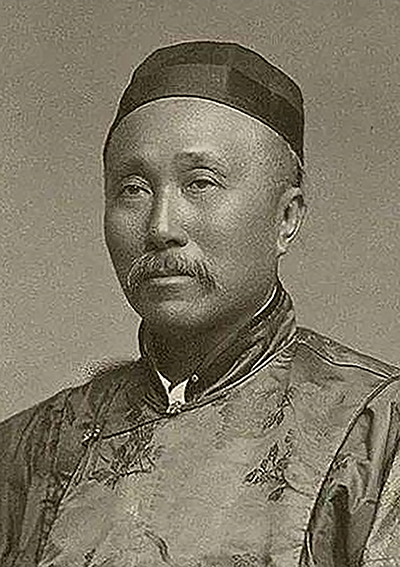
Wu tingfang
Around the succession of the governor, various factions in Guangdong and Central China sang gongs one after another, which was ridiculed as "fighting for the governor is like fighting for bones". Sun Yat-sen’s congressmen elected Wu Tingfang; Guangxi officers proposed that Mo Rongxin should serve concurrently; Yunnan officers first elected Li Genyuan, and then turned to Wu Tingfang; The Institute of Political Science first recommended Li Genyuan or Yang Yongtai, but later pushed Cen Chunxuan because Li and Yang were not qualified enough to compete with Wu Tingfang. In addition, Li Liejun, Chen Jiongming, Tang Tingguang and others were also among the candidates. However, with the development of the situation, most candidates gradually faded out, and the dispute over the governor of Guangdong Province gradually focused on supporting and opposing Wu, and the essence of supporting and opposing Wu was the dispute between Guangxi and Guangdong, specifically the dispute between Guangxi and Sun Yat-sen’s Kuomintang. As Xie Yingbo said, "The People’s Party will have no place to stand unless it regains the political power of this province", so in the name of "Guangdong for Cantonese", it appealed to the Guangdong people to petition "Wu Tingfang, a loyal comrade of our party", to be the governor.
On June 18th, Guangdong members of Parliament took the lead in convening the "Meeting of Guangdong Local Security Council", and the participants included representatives of Guangdong General Chamber of Commerce, Shantang, Confucius Church, Machinery Association, Students’ Union Association, etc. The Council originally wanted to discuss the articles of association drawn up at the previous meeting, but Zou Lu, who attended the meeting, suggested that "at present, there is no need to rush to the governor’s issue to maintain security"; Xie Yingbo further pointed out that the candidate for governor must meet three conditions, that is, local people should do local affairs, not military people, and have the determination to resolutely protect the law, and Wu Tingfang is the most appropriate person to meet these three tips. Representatives from all walks of life who have been exploited by the Guangxi clique for a long time are very much in favor of this theory and all applaud. After the meeting, everyone was divided into three presidents, Cen Chunxuan, Wu Tingfang and Lin Baodi, who were in Guangzhou, to express the general will of Cantonese people.
Representatives of various associations went to the military government to present a petition to President Cen Chunxuan asking Wu Tingfang to be the governor. After reading it, Cen Chunxuan "submitted it to the military governor for deliberation". Regarding the appointment of the governor of Guangdong Province, the president of the military government should ask the governor of Guangdong Province to make up his mind, which shows the strangeness of Guangzhou’s political situation. Besides, the three reasons why Guangdong people support Wu Tingfang as governor are nothing less than a joke to the ruling warlords. Li Liejun, then head of the general staff of the military government, scoffed at the idea of "Guangdong people ruling Guangdong". On June 21st, the Japanese military government held a special meeting to decide the governor’s question. The representative of Mo Rong’s new faction made it clear that "Guangdong people rule Guangdong" only agreed with Zhang Jinfang, and "if anyone else is appointed, he will not be responsible for public security", which was close to a showdown.
Neither the president of the military government nor the governor of Guangdong Province wanted Wu Tingfang to be the governor, and Yang Yongtai and other political scientists got in the way. Although Wu Tingfang called for respect for public opinion, after all, he had no strength to rely on, so he did not resolutely express his intention to be the governor. Therefore, Guangdong people repeatedly petitioned, and neither Wu Tingfang nor the military government expressed anything. According to the information of Guangdong Customs and Taxation Department, the military government is in a "very embarrassing situation, unable to issue a power of attorney to anyone … So, although this problem is urgent, it is difficult to solve in just a few days". In fact, since the 21st government meeting, the issue of the governor has not been included in the agenda of the military government. The military government has no unified opinion, and Mo Rongxin is one step ahead, and Zhang Jinfang has taken the lead as acting governor.
On the other hand, however, representatives of various associations in Guangdong, led by members of Congress sent by Sun Yat-sen, are unwilling to accept the fait accompli, and the petition actions have reached six times as of July 3. Seeing that small-scale petitions were fruitless, Guangdong people began to seek greater unity. Just at this time, the Shanghai National Assembly Director Department sent Zhi Naijin to Guangdong to contact the convening of the National Assembly. Although Zhi Naijin came for diplomatic issues, for Cantonese people, diplomacy and provincial politics are inseparable.
In the logic of the times, the diplomatic problem is caused by the willingness of pro-Japanese officials in the Beijing government to betray the country, so people from all walks of life under the Beijing government unanimously demand that the traitors be punished. However, for the Cantonese people under the military government that protects the law, the Beijing government is illegal, and there is no way to "demand". It is justified to ask the southern government to send troops to "beg thieves". As a result, elsewhere, the Beijing government was asked to punish traitors, but in Guangdong, it became a question of asking the military government to send troops to "beg thieves." If you want to send troops to "beg thieves", you must first calm down the internal affairs, and the internal affairs should focus on solving the problem of the governor of Guangdong Province. As a result, the issue of the governor of Guangdong Province is intertwined with diplomatic issues and the issue of "soliciting thieves".
On July 7th, the Guangzhou Diplomatic Support Association, together with organizations from all walks of life, welcomed Zhi Naijin in the provincial council, and decided to hold a national conference on the 10th. At the meeting, Xie Yingbo and He Jianwu were appointed as the directors and deputy directors of the preparatory meeting, and more than 20 leaders from all walks of life were selected as directors, including Li Pusheng, chairman of the provincial Federation of Students, and Zhang Qirong, president of the Federation of Students in the Middle School.
Since the establishment of the Middle School Federation, the prestige of the provincial capital Federation has been greatly damaged, and there are also some people in Guangdong normal universities who refuse to accept its resolution. Li Pusheng, then chairman, attributed it to his own lack of leadership, so he quit. On June 20th, the Provincial Federation of Students invited representatives of all schools to hold an emergency meeting in Guangdong Normal University. At the meeting, Li Pusheng offered to resign, saying that "the public should be invited to choose talents, reorganize and change their names to avoid outside discussion". At that time, the representatives of A-Class Industry, Chaozhou Bayi and other schools who attended the meeting proposed to merge the Provincial Federation of Students into the China-Shanghai Federation of Students, but it was not passed and the meeting ended without results. Although the provincial Federation of Students has not been dissolved, it has basically been in a state of inaction, and it has shown little performance in the wave of governor change. The main schools actively participating in this matter are the upper secondary schools, among which public law and politics students are the most active.
The Middle School Students’ Union was originally organized and established by public law and law students. The school was elected as the president unit, and the president was held by Zhang Qirong, a student of the school. In the era of the provincial capital Federation of Students, there was no special office of the Federation of Students, and its articles of association stipulated that "the school where the president is located is the office of the Federation, and the school where the ministers are located is the office of the ministries". Because the president of the provincial capital Federation of Students is a student of Guangdong Normal University, most of the meetings of the Federation of Students are held in Guangdong Normal University, and the inaugural meeting of the Federation of Students from Middle School and Upper School is also held in Guangdong Normal University. Jin Zengcheng, president of Guangdong Normal University, no longer allowed the Federation to hold a meeting in the school because it advocated a strike against the will of the authorities and refused to accept the control of the principals, which caused dissatisfaction among the principals of the schools. However, Ye Xiasheng, the president of public law and politics, is in favor of the patriotic movement of students, and the school is adjacent to Guangdong Normal University. Under this circumstance, students from all schools of the China-Shanghai Federation of Students "follow the law school" and make it their permanent address.
Li Pusheng, then chairman of the Provincial Federation of Students, said that after he went to Taiwan, he had to read Ye Xiasheng’s memoirs. "I knew that he was angry with the violent warlords in Guangxi and refused to implement Dr. Sun Yat-sen’s idea of protecting the law, so he encouraged students from schools such as law and politics to take the opportunity to strike to crack down on the warlords in Guangxi." As a matter of fact, the public law and politics students decided to strike in response to the students’ actions in Beijing, Tianjin and Shanghai, pointing at the northern government, not to mention attacking the Guangxi department. If what Li Pusheng said is true, it should be that Ye Xiasheng did not strictly distinguish between students’ response to the May Fourth Movement and their participation in the governor’s issue, and his encouragement to students to crack down on the Guangxi Department should be in the storm of governor change.
As the backbone of the people’s friendship society, Ye Xiasheng has a long history of discord with the Guangxi Department. After the change of the governor, Ye Xiasheng actively participated in it and planned to hold Wu Tingfang as the governor. In this process, the middle and upper school students’ union, led by public law and politics students, also actively participated in it. On June 26th, the China-Shanghai Federation of Students issued a petition to promote Wu Tingfang as the governor, saying that "the governor’s problem is related to the future of education", while "warlords overlapping in power" never paid attention to the education cause, and the education funds were "reduced step by step, so they could not save themselves". Therefore, they resolutely opposed the appointment of Wu Tingfang as the governor and unanimously promoted Wu Tingfang who was "eager to learn after cultivating" and threatened:
As mentioned above, although the China-Shanghai Federation of Students was established because of "advocating strike in concert with the academic circles in Beijing, Tianjin, Shanghai and Hanning", its strike goal cannot "demand" the removal of Cao, Zhang and Lu from the Beijing government like Beijing, Tianjin and other places. Moreover, when the strike was launched, three people had been removed from their posts, and students from all over the country had indicated that they had returned to school to resume their business, which undoubtedly put them in an awkward position. "Guangzhou Gonghe Daily" commented: "The strike of Guangdong scholars can neither blackmail the North Court nor help the Beijing scholars. The time has passed, it is futile, the industry is out of time, and the future is afraid, and those who dare not take it for granted." No matter what the newspaper’s position is, what it says is true, and the strike by the leaders of the upper secondary school Federation is strong but unreasonable. To some extent, Guangdong people’s petition for Wu Tingfang to serve as governor has a coupler with the strike movement of the Middle School Students’ Union. Therefore, besides the influence of Ye Xiasheng, the participation of the China-Shanghai Federation in the governor’s storm also has its active side.
In the process of preparing for the National Congress, the Federation of Middle School Students led by Zhang Qirong did its best. Fu Mingchang, a student in Class 11 of Public Law Foundation and one of the division heads of the Secondary School Federation, fainted on the spot when he went to the military government to petition after the meeting for several days. After being rescued, he refused to rest and gave a speech again on the stage. When he was in a hot place, he bit his second finger and his middle finger, took a white sweat towel and wrote 16 words with his finger blood, "Compatriots are alert, work together to save, fail to achieve their goals, and swear to the death as one". Fu Mingchang’s move has played a great role in mobilizing the emotions on the spot.
On July 10th, Guangdong National Congress was nominally a diplomatic issue. Therefore, firstly, Zhi Naijin introduced the "Three Strikes" movement in Shanghai, and secondly, Tan Renfeng gave a speech advocating the crusade against Xu and Duan. However, what they said was not a common concern of Guangdong people. After their speeches, some Cantonese speakers turned the focus back to the issue of the governor, saying that "we should save Guangdong first if we want to save the country", "In recent years, the military dictatorship … regards my Guangdong as a conquered land", and "It is obvious that the military government has shown no sympathy for the fact that President Gong Juwu is also the governor, and it has ignored the people of Guangdong", and then called on the participants to petition the military government together. When they arrived at the military government, they put forward two major goals: first, they asked the military government to order them to leave immediately to "beg thieves", and second, they asked Wu Tingfang to serve as the governor. As a matter of fact, the first requirement is only to join in the excitement of the National Assembly in Shanghai and other places. What the Cantonese people really care about is the second one. As the newspaper said at that time, "Asking for thieves at such a time is just a foil article, and its sole purpose is to cover the issue of the governor."
The military government still pays lip service to the Guangdong people’s petition, without any affirmation, and the crowd is getting more and more passionate and losing patience. According to people’s understanding at that time, the petition was for fear of "being trapped in the news", so "asking the government to accommodate it according to the people’s opinions". However, the Guangdong people have petitioned several times and still failed to see what the military government said. Obviously, it is no longer an uninformed problem. The government "flagrantly ignores the interests of the people", and the people have to think about "self-determination". "We are sincere in patriotism and seeking thieves, so we have our own good strategies to achieve this goal. Hu Shizhen turned to the military government for help, and even more Hu Shizhen prayed for the insensitive president! " There was a demonstration of the "Three Strikes" movement in Shanghai, followed by the introduction and advocacy of Zhi Naijin and Tan Renfeng, and the strike movement in Guangzhou came out at once.
After the petition on that day was fruitless, most people thought that "the matter will not be solved unless all the business circles are required to strike", and then they suggested that they should go to Yangong Street and ask the General Chamber of Commerce to call for a strike immediately. As a result, under the guidance of students from all schools in the middle school, a large group of people rushed to Yan Gong Street. The strike in Guangzhou seems to be a temporary motion of the National Assembly, but it is not. In the process of preparing for the Guangdong National Congress, there has been news of a strike. When everyone arrived at the General Chamber of Commerce, Hu Songtang, the vice president, told everyone that "the strike was very much in favor, and we have convened colleagues to discuss it today". People then demanded that the general chamber of commerce issue leaflets on the strike. Although Hu Songtang hesitated at the beginning, but under the strong will of the public, he had to take out the word "strike" in a big book with paper and pen, and put his name on the board of directors of the two sessions, stamped it with a seal, and handed it over to everyone. So the representatives "quickly prepare leaflets and hand them over to the clerks for immediate printing and delivery". It can be seen that the leaflets on the strike have been drawn up in advance.
On the same day, after everyone arrived at the General Chamber of Commerce, Vice President Hu Songtang first asked the delegates why they went on strike. The representative replied: one was to ask the military government to order "stealing thieves", and the other was to petition Wu Tingfang to become the governor. All the leaflets on the strike on July 11 also clearly targeted these two tasks as the strike target. However, when the newspapers in the provincial capital logged in the leaflet, they only mentioned the first meaning, and avoided the number of "and asked Wu Tingfang to be the governor" and dared not publish it. As a result, the military and political authorities in Guangdong exploited this loophole and banned it, obliterating the Guangdong people’s petition for Wu Tingfang to be the governor, "lightly blaming the North Court" and once again repeating the old tune of opposing the students’ strike. In this case, a businessman issued a circular under the banner of the civic group, claiming that he was "quite suspicious" because he was not clear about the purpose of the leaflet.
Putting forward the problem of "soliciting thieves" is a hot topic in Beijing and Shanghai, and its essence is only a companion to the governor’s problem. Instead of trying to outsmart ourselves, it usurps the host’s role. In view of this, the China-Shanghai Federation of Students decided to issue a statement that the strike was entirely about the governor, and immediately published a concise notice, which was posted on the 12 th. At the same time, students were organized to "tear up all the notices of the inspector, the governor and the police department". Although the post police looked askance, "however, they did not dare to interfere."
After unifying the goal of the strike, the China-Shanghai Federation of Students organized a joint parade of students and citizens on July 12 to "persuade" the merchants to strike. In the parade queue, students are in the front, citizens are in the middle, and children are in the back. During the parade, everyone holds a white flag with the petition Wu Tingfang as the governor. Where students pass, they should close the shops immediately, otherwise they will "throw stones at random". Passengers are required to get off when rickshaws come and go on the way, and drivers are ordered not to exercise again, and foreigners are no exception. In the storm of governor change in Guangdong, Guangdong Zhonghua New Newspaper, which is close to the Institute of Political Science, made a big statement that "the post of governor should not be concurrently held by President Wu", and scorned that the gentry and businessmen from all walks of life were led by Li Yaohan, so it was "greatly criticized by the society". Therefore, when the brigade passed through Guangdong Zhonghua New Newspaper Office, there was a lot of noise and the signboard and the outer door were destroyed. On 13th and 14th, a number of students went to various houses in Mibu, and "they were ordered to close the door immediately, so as not to make people angry". The merchants were so turbulent that "they didn’t dare to resist" that they left the door half open.
At the same time, the China-Shanghai Federation of Students also actively participated in promoting the workers’ strike. On the 13th, a number of students went to the machine room of the water supply company and ordered to stop construction. The water supply in the whole city was immediately interrupted. Ma Chaojun and Huang Huanting, leaders of Guangzhou Machinery Trade Union, were both close to Sun Yat-sen’s Kuomintang and actively led the strike movement. On the afternoon of the same day, a group of students and dozens of workers from the machine trade union broke into Guangjiu Railway Station, and the train stopped immediately. In addition, Guangzhou Electric Power Company sent a letter announcing that it would strike on the 13th, claiming that "the problem of the governor must be solved".
Since Zhu Qinglan left his post in 1917, there have been three waves of governor changes in Guangdong Province. Every time the governor of Guangdong Province changes, the voice of "Guangdong people ruling Guangdong" is rising, but in the end, "it is all about the military leaders of Guangxi". Huang Shaohong said that the Guangxi sent troops to protect the country, which was intended for Guangdong. Therefore, when it occupied the coveted "wealth zone", it was bound to be unwilling to be constrained by others. The British intelligence department also pointed out the interests: "Guangdong Province is actually under the control of the Guangxi authorities, and the Guangxi authorities are certainly unwilling to choose a smart Cantonese as the governor." Whether the territorial dispute can be controlled by public opinion, therefore, even if the Guangdong people’s strike and strike for petitioning Wu Tingfang as governor are huge, the Guangxi warlords in power are not moved.
On the afternoon of the 13th, Mo Rongxin hosted a banquet for the gentry, scholars and businessmen to discuss ways to proceed, refuted the reasons for the Guangdong people’s strike one by one, and ordered the commander of Jiangfang and the military police to send troops to patrol the city and outside, "effectively interfere with the shops and trade as usual". Zhang Jinfang also sent his new army guerrillas to the streets to persuade the market to open. Guangzhou Electric Power Company was determined to strike because it was led by Guangdong Machinery Union, so Mo Rongxin threatened to take the company back to the official camp, and sent people in Hong Kong to hire five Chilean foreign firms and French electrical pilots at the daily salary of 50 yuan to take over temporarily. He also personally called Lin Baoyu and seconded warship electricians to him to serve in the Electric Light Bureau temporarily. The police also sent people to the waterworks to protect workers from starting work.
In this strike storm that supported Wu Tingfang as governor, Zou Lu and Xie Yingbo, members of Guangdong Parliament, made great contributions. Zou Lu was so hoarse that he couldn’t speak because he had been urging the Cantonese people to petition for everything for days. Xie Yingbo also personally went to the electric light company and the waterworks to encourage strikes. Mo Rongxin was very angry with the two men and wanted to resort to conspiracy. When Wu Tingfang got the news, she immediately sent someone to take Xie Yingbo away, and the next day she secretly sent him to Hong Kong. Zou Lu also received the news that Guangxi wanted to arrest him and had to take refuge in Hong Kong temporarily. Huang Huanting, the general manager of the machine assembly, was detained by the police station on the 14th.
At the same time, the Guangdong authorities began to ban gatherings of Cantonese people. On the afternoon of 14th, when more than 100 students and more than 2,000 machine workers went to the provincial council to petition, a large group of military police rushed to forcibly dissolve them. In the process, some policemen fired dozens of shots, which caused chaos, and more than a dozen people fell and were beaten by guns. At noon on the 15th, the Metropolitan Police sent a large brigade with two machine guns to the East Park to forcibly dissolve the Guangdong people’s assembly. At first, each of them didn’t want to obey, but when they saw that there were soldiers and policemen standing separately outside the park, "I knew I couldn’t resist, so I left at the same time." The bronze drums, speakers, leaflets and various miscellaneous appliances in the park were also taken away by the police. By the afternoon of 16th, "the electric lights were restored, most shops were open, and major companies were fully open".
Public opinion leaders fled and grasped, mass gatherings were also banned, and the strike trend was difficult to continue. After the news that the Guangxi authorities suppressed, arrested and shot the Cantonese people came out, Sun Yat-sen and Tang Shaoyi in Shanghai called the Guangdong authorities to demand their release. Tang Shaoyi, in particular, accused the military junta of protecting the law on the grounds that "the Beijing government immediately released the arrested students, and no more demands were made". Those who criticize it as a "pseudo-court" are exemplary today, and the paradox of history is deplorable!
Although the strike movement in Guangzhou was much slower than that in Beijing, Shanghai and other places, the Cantonese people also played the banner of diplomacy and "soliciting thieves". Therefore, many studies have classified it into the May 4th movement, criticizing the military government that protects the law in the south and the Beijing government as birds of a feather. In fact, blaming the military government for suppressing the pro-democracy movement wronged the military government and overestimated it. This fact was attributed to the warlords of Guangxi.
The real goal of the strike in Guangzhou is to petition Wu Tingfang to be the governor. In other words, if we only rely on diplomatic issues or "soliciting thieves", I am afraid it will not be enough to trigger a strike in Guangzhou. The issue of the governor of Guangdong Province has even diluted diplomatic issues. According to Japanese intelligence agencies, the strike movement caused by the change of Guangdong’s governor has cooled down Guangzhou students’ boycott of Japanese goods. The strike movement in Shanghai is directed at the Beijing government and has no intention of disturbing the local order. Although it is powerful, it has a rational side. The essence of the strike movement in Guangzhou is internal factional struggle, and the target is the Guangzhou authorities, so it is more intense and turbulent. However, although the objectives of the hatchback are different, the strike trend in Guangzhou is indeed stirred up by the "three strikes" movement in Beijing and Shanghai, and it cannot be said that the two are absolutely unrelated.
The strike movements in Guangzhou, Tianjin and Shanghai have different goals, but the ways to achieve them are also different. Although they are all students-oriented, when students in Tianjin and Shanghai persuade merchants to strike, they mostly plead emotionally and rationally, and even kneel down and cry, "taking the body as a base for political and moral education" and "making businessmen give up the habit of making money first"; However, most of the measures taken by Guangzhou students to promote the strike are forced, and there are many conflicts between students, businessmen, workers and even students and the general public, especially the situation of water stoppage, power outage and soaring rice prices, which seriously affect the normal life of residents and the operation of the city and have gradually lost its justice. Just as the Republican Labor Party led by Zheng Cangsheng said in the leaflet issued at the height of the strike: "The governor’s question about people’s happiness is still small, and a strike is really harmful to social order." It is also a strike trend. The goal of the "Three Strikes" movement in Shanghai is to punish the traitors of Cao, Zhang and Lu, which is inspired by the national justice, while the purpose of the strike in Guangzhou is to support Wu Tingfang as the governor. Although it also concerns the status of Cantonese, it is not comparable to the appeal of the national justice.
In fact, most shops in Guangzhou do not respond positively to the strike movement, and there are many negative behaviors, such as the door panel is half-closed, the main entrance is closed and the side door is opened, or the patrol team will close quickly, and the team will resume business as usual after passing. Therefore, the support of Wu Tingfang as governor, encouraged by Sun Yat-sen’s Kuomintang faction, may not be universally recognized by ordinary businessmen. Judging from the results, the strike movement in Guangzhou did not achieve the expected purpose. The strong suppression by the Guangxi authorities is of course an important reason, and the negative treatment of the strike movement by Guangzhou businessmen is also a factor that should not be ignored.
Fourth, the aftermath of the governor’s problem: the China-Shanghai Federation of Students and the trend of changing public law and politics.
During the strike in Guangzhou, students from various schools under the leadership of the Federation of Middle School Students played an extremely important role, so they were quite annoyed with the authorities. When the agitation subsided, the Guangxi authorities also began to take measures to suppress it. The president of the Middle School Federation is a public school of law and politics, and the office is also located in the school. The president of the school, Ye Xiasheng, has always been very anti-Guangxi, so "many people have accused Mo Rongxin and Zhang Jinfang of Ye’s family" and called him the behind-the-scenes ambassador of the students. As a result, the provincial department removed Ye Xiasheng from the post of principal on the grounds that he connived at the Shanghai-Shanghai Federation to work in the school at will. Also exempted is Deng Yinghua, the president of Guangdong Public Medical College, and Huang Qiang, the vice-president of the Secondary School Federation, the president of Class A Industry, is also to be replaced. Therefore, students from the second school are also very active in the agitation. At the same time, Mo Rongxin told the public law and politics school that "students have gathered for meetings every day to encourage the strike, which is extremely inappropriate". On the 17th, he ordered the police division to "send police to strictly prohibit it at any time". The Guangxi authorities "sealed the shops and took care of them as soon as they were found out" for the printing firms entrusted by the Federation of Middle School Students, so the printed materials of the Federation were mostly printed in public schools of law and politics. This move further annoyed the authorities, and Ye Xiasheng added another charge.
"The headmaster is guilty because of the students", "As soon as this end is opened, the fear of learning will surely surge again", and the comments of Shenbao became a prophecy. Faced with the above-mentioned disposal by the authorities, the schools of the China-Shanghai Federation of Students were "extremely angry". They held an emergency meeting and decided that "no matter which school changes its principal during the strike period, it will absolutely deny it". With the consent of all, public law and law students intend to express their "astonishment" at the fact that President Ye Xiasheng failed to interfere in the activities of the student union, and then argue that the association was established solely for saving the country and had nothing to do with the president, and explain that the public law and law school was decided as the office by voting, and "the president could not stop it". In response to the authorities’ accusation that Ye Xiasheng encouraged the student movement, they retorted: "More than 30 schools in the province are involved. Can President Ye instigate them one by one?" Finally, he said that the governor "blamed the principal" for the organization of the student union, "denied the existence of the student union" and threatened the provincial department to take back its mandate, otherwise "there will be no class day unless we fight to the death."
Judging from the Book of the Governor, the China-Shanghai Federation of Students tied the issue of Ye Xiasheng’s dismissal to its own legitimacy and even survival. Although Ye Xiasheng is the head of a public school of law and politics, his stay or absence is no longer a matter of a public school of law and politics, which has once again triggered a long-lasting student trend, and students from all schools in the upper secondary school are widely involved. When the strike wave in Guangzhou started, the Guangxi authorities deliberately ignored the people’s demand for supporting Wu Tingfang as governor, but turned it to diplomatic issues to oppose the Guangdong people’s strike movement. The China-Shanghai Federation of Students pointed out its interests in time and made every effort to clarify that what it did was only the governor’s problem. However, when the Guangxi authorities wanted to punish the students for their involvement in the governor’s issue, the China-Shanghai Federation of Students turned to the diplomatic issue, accusing the authorities of suppressing the patriotic movement of students and saying nothing about their involvement in the governor’s issue. This fickleness between offensive and defensive fully reflects the complex entanglement between Guangzhou student movement and the political situation in the north and south.
After Ye Xiasheng left his post, Yang Yongtai wanted to move his cronies, He Liwen, to take over, but He Liwen was a member of the provincial council, so it was inconvenient to be appointed as the principal. Therefore, Zhang Jinfang was transferred to District Dayuan, a former president of public law and politics, which may be the result of the firm recommendation of Guangdong gentlemen Wu Quancui and Li Tinggui, who were consultants of the Military Supervision Department at that time. Zhang Jinfang may consider that Qu Dayuan is an old man in the late Qing Dynasty, at least he will not "indulge" students like Ye Xiasheng. In addition, he has been in charge of public law and politics for four years, and it will be less tortuous to replace Ye. However, at this time, the principal problem is by no means a pure personnel change, and the students of this school have not given the old principal face. When they learned that District Dayuan had taken over, they issued a declaration of resistance, claiming that they would retain President Ye with "Peking University’s intention of retaining President Cai". At the same time, they sent a letter to District Dayuan asking him not to come: "Mr. District used to grow up in our school, and he should welcome him with his usual hospitality, but at this time, for this reason, he did not show his conscience and justice …" In addition to the letter of persuasion, there are also students who go to the district house to urge them not to take up their duties, but the district university is willing to take office. In view of this, Zhang Qirong, president of the China-Shanghai Federation of Students, proposed to everyone: "If District Dayuan doesn’t care about the students’ opinions and rushes to play, he will join the group in advance to wait for the head door and advise him not to come. If he still doesn’t care about the public, he will be expelled."
Although district Dayuan was wary after receiving the student leaflets, he did not give up. Instead, he was worried that "if the time for receiving the leaflets is too long, the students will stir up more troubles" and decided to take office on the 21st. Before taking up his post, he sent many people to dredge up the students, and promised to invite them to have a school talk meeting afterwards to "seek a proper solution", but the students still refused. On the 21st, most students of public law and politics gathered in the school, and many people were sent to stand in front of the school. District Dayuan was afraid to come to the school because he was afraid of making a stir. This made Cui Jiannan, Yao Lixiu and other faculty members who had already made preparations for the welcome disappointed, and later went to the district house to "discuss the secret method of taking things."
The so-called "secret connection method" means that Cui Jiannan stole the proofreading seal from Yang Zanting, the printer, and handed it over to District Dayuan. On the 28th, District Dayuan sent another servant to the public law office to contact and receive matters, and his person was almost beaten. Seeing that there was no way to negotiate directly, District Dayuan decided to "find another way". On the one hand, he found Wu Weilin, a preparatory student of the school, and made him secretly spread the message that "anyone who agrees with the district principal is free of tuition" to the students, and gave him 24 yuan as a communication fee; On the one hand, he threatened the students of Class 11 of the public preparatory course of law and politics, calling the class Ye Xiasheng’s pro-recruitment. "All Ye’s party members will be screened in the future." This action made the students of the school "extremely angry", and a meeting was held on August 15 to discuss the method of "holding leaves and refusing areas" At the meeting that day, everyone decided on the following measures: send a letter and send a representative to see Cui Jiannan, and give it back to the school for printing within five days, "or deal with it by means of dealing with Zhang Zongxiang"; Then petition the military government to revoke the order, and if it is not ordered, contact the faculty to maintain the school affairs; As for Wu Weilin’s case, he was considered to be a first-time offender, so he was ordered to issue a letter of repentance, and it was decided that anyone who privately expressed his personal opinions and was subjected to various sports by outsiders in the future, "all of them thought that they were public enemies, and the student group announced that they would be expelled from their school."
District Dayuan was appointed by the principal on July 17, and has been delayed for more than a month. So far, he has not taken care of things, and even failed to get into the school gate. Both bright and dark ways have been tried, but they have failed, and his patience has gradually lost. At noon on August 19, District Dayuan tried to go to the school by force, but was still refused behind closed doors for the students of the school to find out beforehand. With the warrant of the governor, he dispatched 30 armed policemen from a division of the police department, smashed the wall of the west corridor of the public law and politics school several feet, and took his son and Cui Jiannan to the school through the gap. After entering the school, District Dayuan ordered the police to "destroy" all the signs in the office of the upper secondary school and all the public property in the school, and all the students flocked to ask him questions. Seeing that the situation was not good, District Dayuan and others retreated to the back door one after another, "escaping from the bottom of the toilet", and Cui Shaonan also "hurriedly got out of the crowd and still escaped from the bottom of the toilet" after he was handed over to the press.
After this twists and turns, public law and law students once again issued a declaration that "President Ye will be reinstated and will not attend classes anyway"; On the one hand, the main entrance of the school and the east-west corridor road are locked, leaving only one entrance and exit, and students are sent to guard in turn, "extremely strict alert." At this point, Zhang Jinfang ordered District Dayuan to suspend taking up the job, and sent representatives from the Education Branch to mediate with He Jianwu, the president of Nanwu, on the grounds that "all businesses are not in harmony, and he was afraid of going too far, or giving birth to other reasons", but he finally returned in vain. Under this circumstance, district Dayuan gave birth to his resignation, so he wrote to the governor to urge him to resign. In his submission, he said that public law and politics had "changed from time to time", which was not the scene when he was the principal. He blamed the students for breaking the door and destroying things in the process of taking over the school on the 19 th. "Obviously, correcting the public and destroying the school, but being falsely destroyed by the police; Clearly forced to seal the beating, and falsely accused the students of being beaten … to reverse right and wrong, and to cover up the evil ",and said that" the students are so violent, the principal is too busy to take responsibility for the students and become worried about the future of the country ",and then asked the governor to" quickly approve his resignation without delay ". When public law students heard this, they were furious, and immediately wrote an article to expose eight major crimes, such as supporting the imperial system, smoking opium, borrowing schools to make profits, bribing students, and destroying public property. Qu Dayuan’s submission shows that he is no longer willing to get involved in this matter, and the students’ condemnation also shows that there is no turning point in refusing the district, and the two sides are gradually becoming fire and water.
After District Dayuan’s resignation was submitted to the Provincial Department, Zhang Jinfang, the acting governor, did not want to approve it, but invited him to come to the Department for comfort and said that he would help it with the strength of the official department. An important person in the office said, "Students’ habits are the same as those of the citizens’ group who gathered in the East Garden to petition a few days ago. If they make trouble, they must not be accommodated to make trouble, so as to make a noise." And they threatened to disband the public legal affairs and send troops to station, and they were allowed to return to school only after each student issued a letter of repentance and "their families guaranteed that they would never make trouble." It was also reported that District Dayuan sued several students in Guanting, and the public became more and more indignant. Therefore, a plenary meeting was held, stating that the matter of "keeping leaves and refusing the district" was acted in unison by all the students. If Guanting must use disciplinary measures, only all the students would bear the responsibility. "There is no reason for three people to be involved in business."
It is not a good thing for the headmaster to solve the problem for a long time. The Federation of Secondary and Upper Secondary Schools has informed all schools to attend classes before September 10. At this time, the public law students were in a bit of an awkward situation. Ye Xiasheng had already left Guangdong for Shanghai, and sent a letter to the students of the school stating that they had no intention of falling in love with the stack. The students of the school refused to leave the area and it was difficult to ride a tiger. Therefore, they decided to follow the example of Beijing and maintain the school affairs with the teachers of our school, which still achieved the purpose of leaving leaves in name. At the beginning of September, the public law and politics sent people to Shanghai to inquire about Ye Xiasheng, asking him to send a letter asking all teachers to come forward to maintain the school affairs, and put forward the opinion that Mo Hongqiu, a teacher, should be the principal, and Ye Xiasheng agreed. After the student representatives returned to Guangdong, all the business students thought that Mo Hongqiu "belongs to the faculty of our school and has the consent of President Ye, so the students need not be too stubborn", so they immediately put forward their opinions, asked the governor to appoint them, and agreed with the Academic Affairs Office to attend classes as usual on September 19. Although the Provincial Department did not appoint Mo Hongqiu as requested by the students of public law and politics, the appointed successor Zhang Naibi was a teacher of the school and then the director of the economic department, so the students of the school did not insist. Since then, the turmoil of public law and politics has come to an end.
As a representative of the Beijing Federation of Students, Fang Hao said in his autobiography that after they arrived in Guangzhou, "four mass meetings were held, attracting more than 100,000 people, so within three days, not only all the young students responded unanimously, but also the vast industrial and commercial circles unanimously implemented a strike." Judging from this passage, it seems that the frustration he encountered in mobilizing students to strike in Guangzhou has been forgotten. In particular, he called Guangzhou, Beijing, Tianjin and Shanghai as the four "backbone cities" that forced the Beijing government to recall Cao Zhang and Lu, and it seems that he did not leave any impression on the influence of the political situation of the north and south governments on the students and the people in Guangzhou. Even those who witnessed the student movement in Guangzhou during the May 4th Movement, except for Li Pusheng, who mentioned the influence of the North-South political situation slightly when explaining the reasons for not stopping classes at the beginning, others such as Huang Shaosheng, Deng Zengxiang, Zhang Dianbang and Luo Zongtang did not recall this matter in a word.
For a long time, people tend to think that the May 4th Movement is a collective action with one voice under the guidance of "patriotism", which obviously ignores the complexity of collective action achieved by spontaneous groups. Guangzhou, as the political center of the southern protector military government, is in a rival political position with the Beijing government. When the May 4th patriotic movement was transformed from "resisting power from outside" to "punishing traitors from inside", people from all over the country rushed to join the "Three Strikes" movement with the goal of punishing traitors from Cao Zhang and Lu, but this mobilization goal was in an identity dilemma in Guangzhou under the military government, which directly led to the division of the provincial capital’s student union. After all, the people in the military government’s jurisdiction lack the legal basis for threatening the hostile government to dismiss its officials. Although the Middle School Students’ Union, which started from a new stove, finally went on strike, it could not be classified as the tide of student movement in Beijing and Shanghai, and it was somewhat heroic and indefensible. It was not until the change of governors appeared that it provided a coupler for energy docking for the strike. More than a month after the "three strikes" movement in Shanghai and other places ended, the strike movement broke out in Guangzhou’s industrial and commercial circles, but the goal was to petition the military government to appoint Wu Tingfang as governor. Although the strike movement in Guangzhou is also covered with diplomatic problems, its essence is internal factional struggle, which is not only in the same sequence as the "three strikes" movement in Beijing and Shanghai, but also has no broad popular base in Guangzhou, and soon ended in failure. The May 4th Movement in Guangzhou, Beijing, Tianjin and Shanghai is not only different in pace, but also has its unique content and obvious localization characteristics.
The May 4th case in Guangzhou reveals that local societies, such as the original differences among students and the existing political situation, all have their own historical development context, and their inertia on the original track is large enough, even if the May 4th Movement swept across the country, it failed to change its inherent pattern. This is of great significance to the study of the history of the May 4th Movement in other places. At the same time, the differences and diversity in Guangzhou’s student groups during the May 4th Movement revealed in this paper remind us to pay full attention to the complex aspects of the student groups themselves, and to be wary of ignoring the students’ subjectivity in the research of "sports students". In addition, the organizational difficulties faced by local student federations as "consortia" during the May 4th Movement are also worthy of further discussion, which provides a reference for studying the organizational transformation of student associations after the intervention of political parties.
(This article was first published in The Study of the History of the Communist Party of China, No.1, 2021, with the original title "A New Probe into the Student Movement in Guangzhou during the May 4th Movement under the Protection of the Military Government". The author Shen Zhigang is a doctoral student in the History Department of Sun Yat-sen University. Authorized by The Paper, the original text is omitted. )