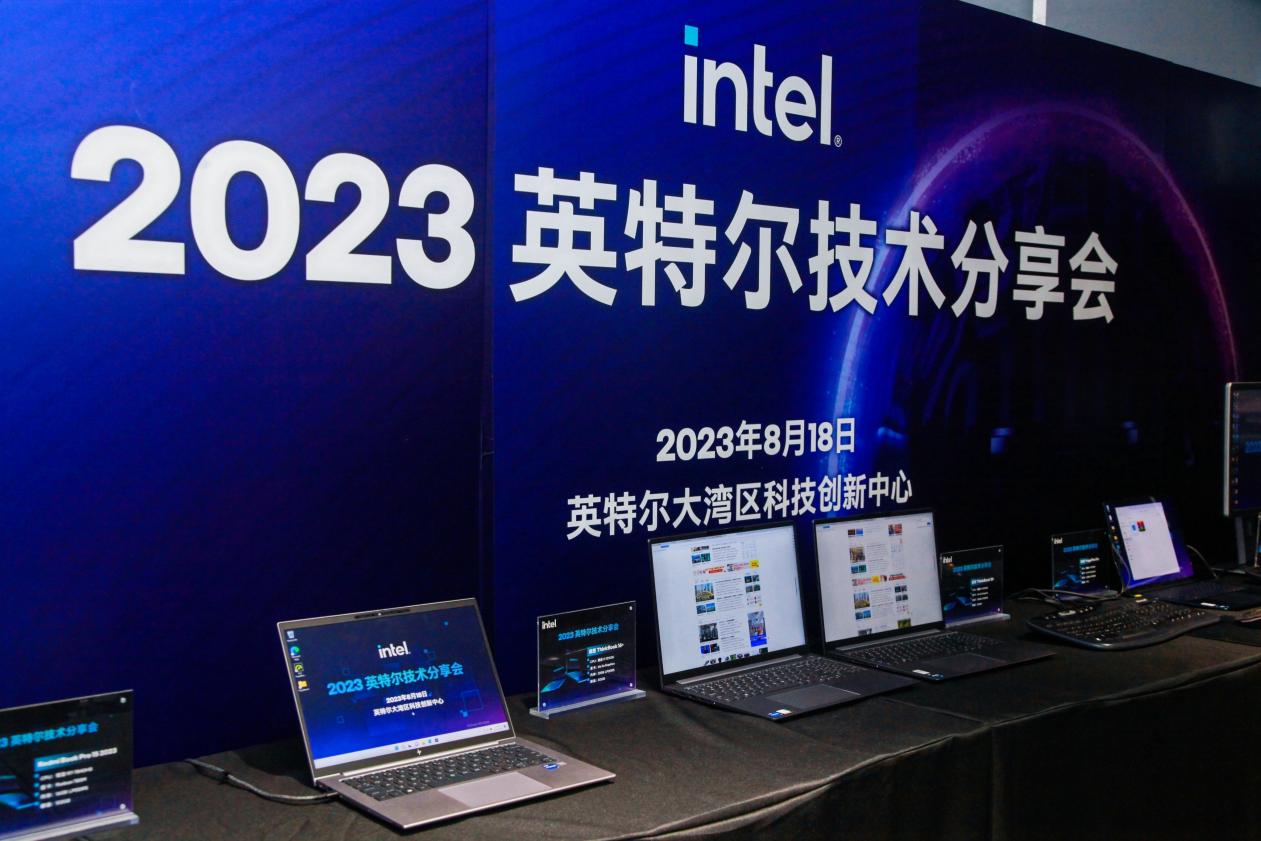
IT House reported on August 24th that on the morning of August 18th, 2023, Intel held a technology sharing meeting in Greater Bay Area, with the theme of Intel’s latest progress in AIGC (Artificial Intelligence Generative Computing). At the meeting, Intel’s technical experts showed the participants their technical direction on AIGC and demonstrated several applications.
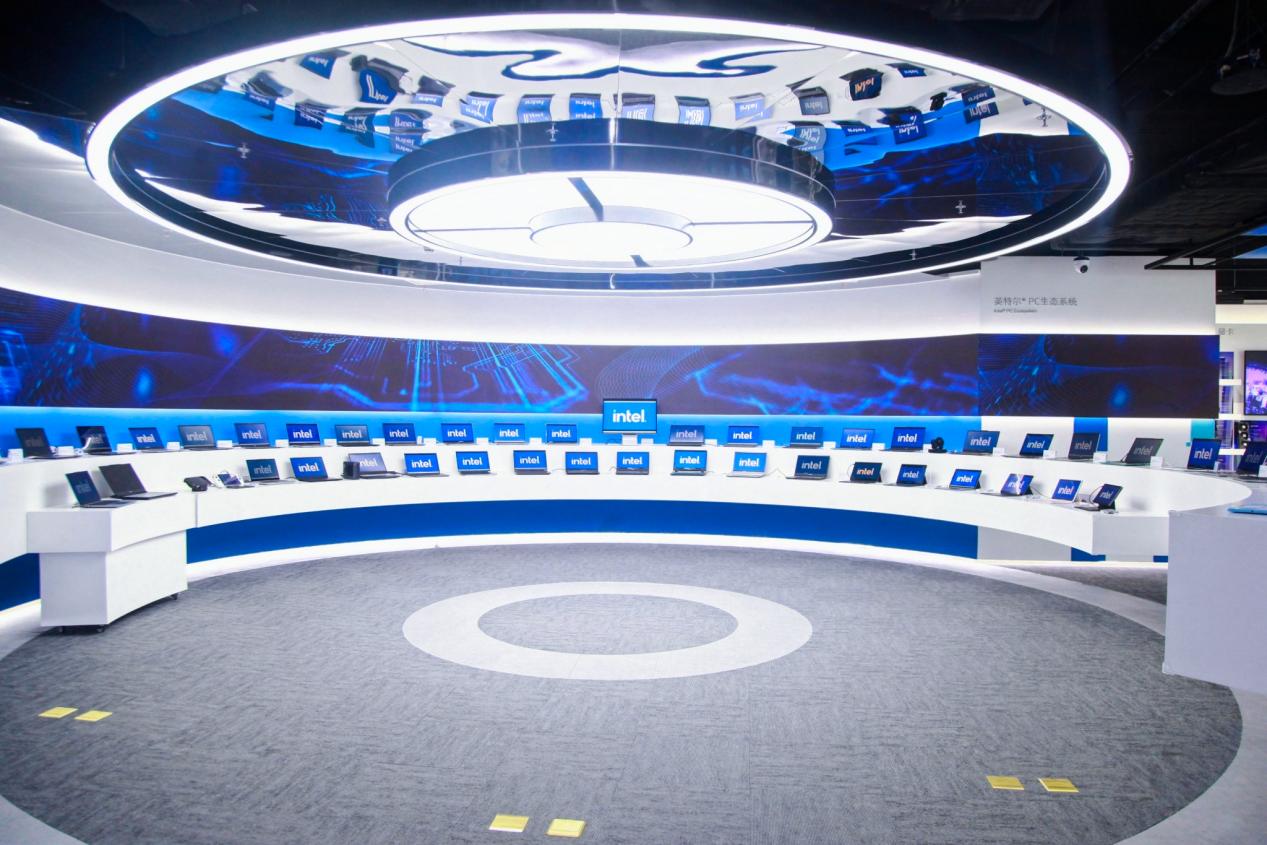
First of all, Intel introduced their optimization and support in the big language model. In our traditional cognition, operation is similar to     ChatGPT, a big language model, must be supported by a graphics card with large memory. But this exchange meeting has subverted our cognition. In order to make     The 12th and 13th generation Core platforms can also run all kinds of large language models smoothly and provide a smooth experience, and build BigDL-LLM    Ku. Through this library, various large language models can be optimized and supported, including some open source large language models that can be run locally. This library can even run large language models with parameters as high as 16B on a machine equipped with an Intel laptop with 16GB of memory. In addition, it also supports LLaMA/LLaMA2, ChatGLM/ChatGLM2 and other large language models.

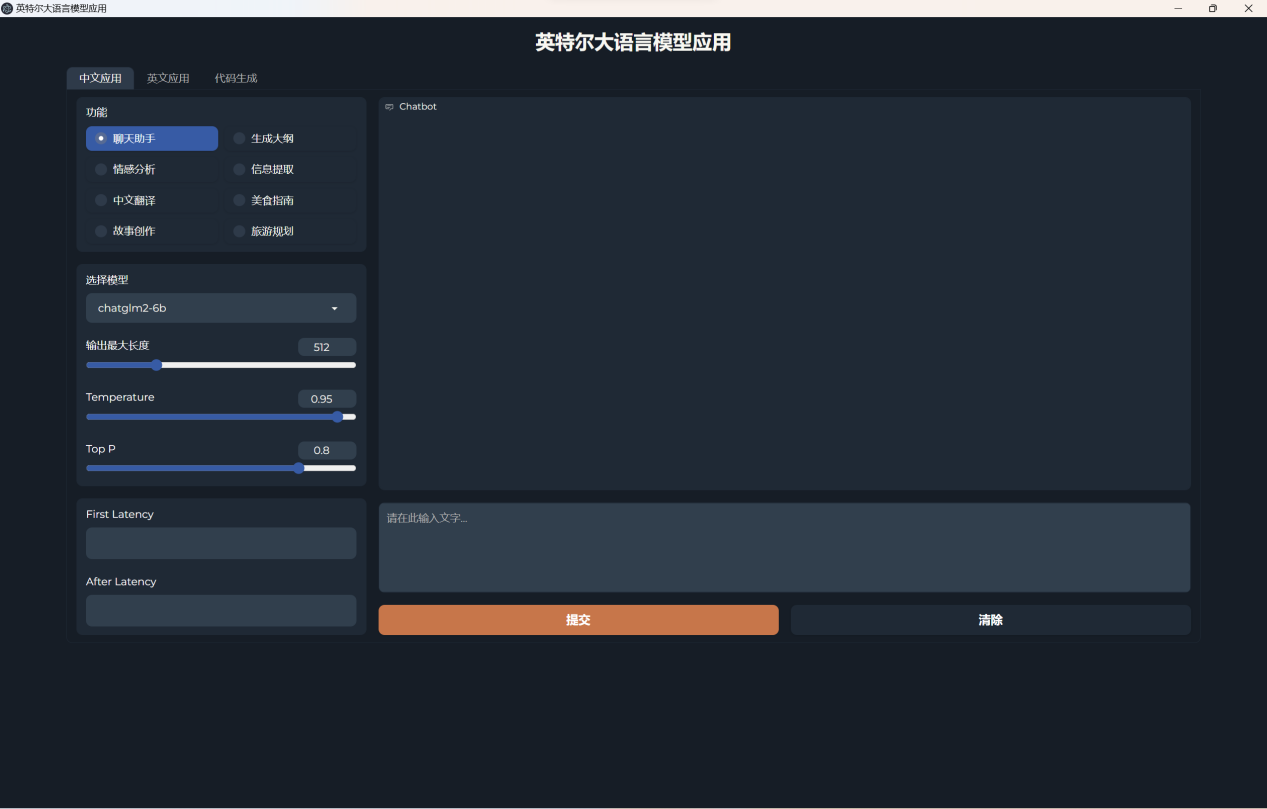
Next, Intel showed their performance in the application of big language model. By integrating     The     Demo, they demonstrated the performance of these models in Chinese and English applications. Through optimization and quantification, these large language models can be generated at a very fast speed when generating answers without affecting the reading experience. Intel has released this set of     Demo, any computer equipped with the 12th and 13th generation Core can be directly installed and experienced.
We chose a thin and light book that passed the Intel Evo platform certification: Huawei MateBook 16s for testing. The processor is Core i9-13900H+32G memory. Let’s see if we can run AIGC on the thin and light nuclear display notebook.

The Demo installation process of Intel’s large language model is very stupid. Intel has packaged it into an EXE file. After installing and importing the large language model in. Bin format, it can be run. When we open the interface, we can see that we can select chat content, adjust model parameters and view operation delay on the left, and the chat box is on the right.
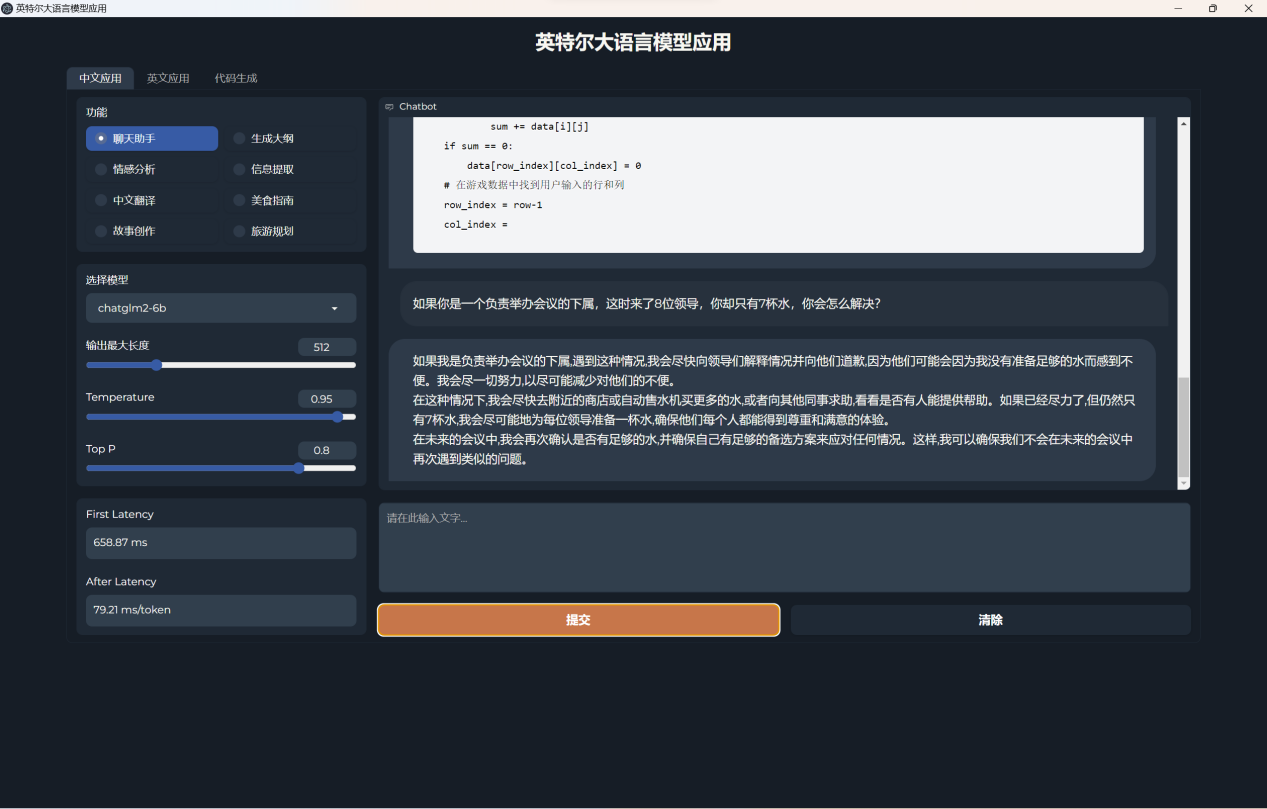
The author first tried to ask him some questions about the world, but he didn’t expect to answer very well and respond quickly. It only took 658.87ms for such a question to complete the response.
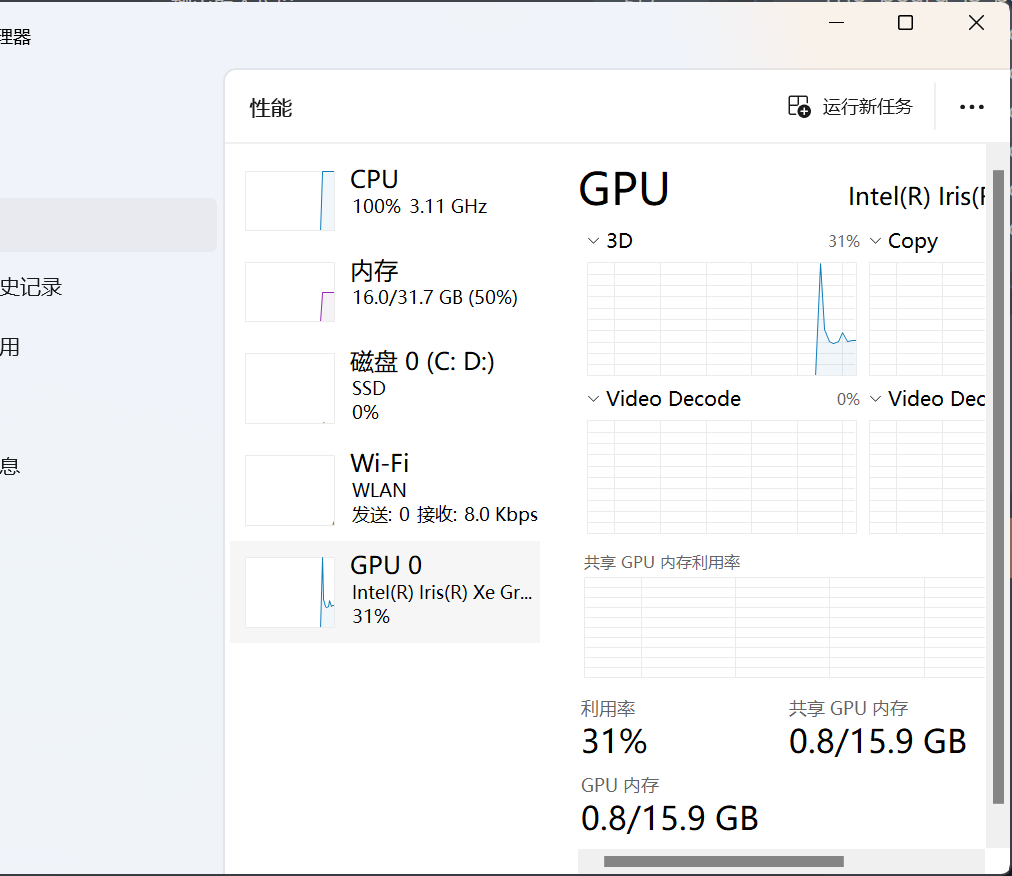
During the operation, we can see that the occupancy rate of i9-13900H reaches 100%, the memory occupancy reaches 16G, and Xe nuclear display also occupies a certain amount. It seems that this operation process is indeed carried out locally. After Intel’s continuous optimization and the improvement of the computing power of the 13th generation Core processor, we really achieved the AIGC landing on a thin and light notebook.
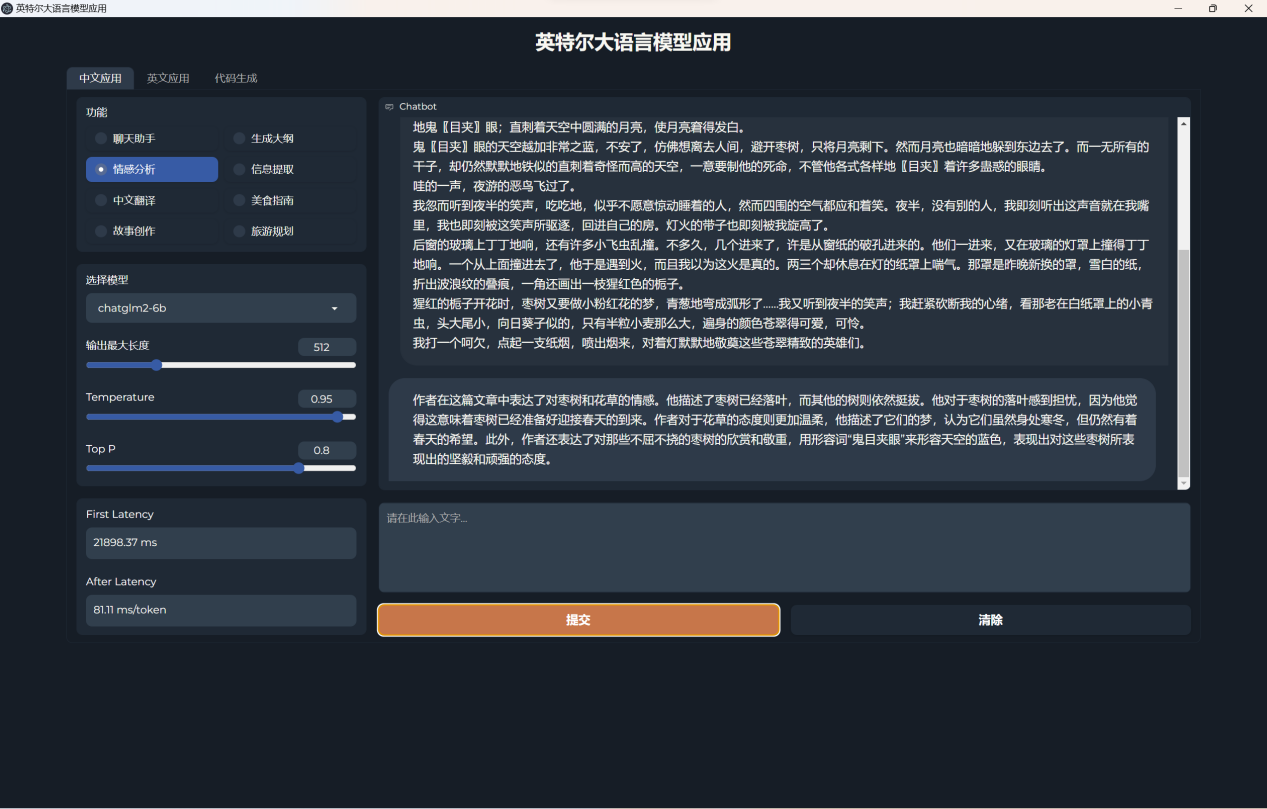
In the emotional analysis function, we let the big language model analyze a classic prose. It can be seen that although the analysis angle is relatively simple, there is no logical error and it can be self-consistent.
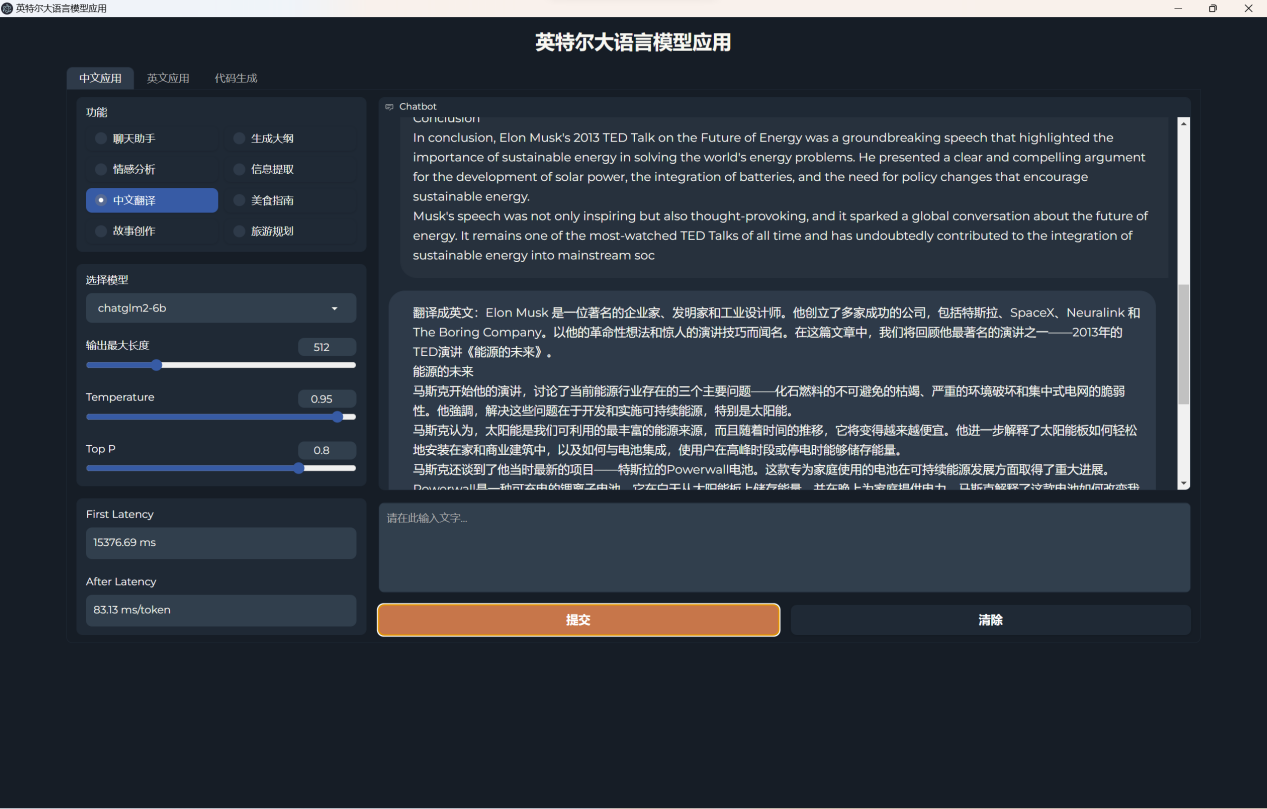
In this Chinese translation function, the performance of Intel’s big language and model surprised me even more. Its translation quality is quite high and its speed is very fast. Even manuscripts with so many proper nouns can be translated accurately.
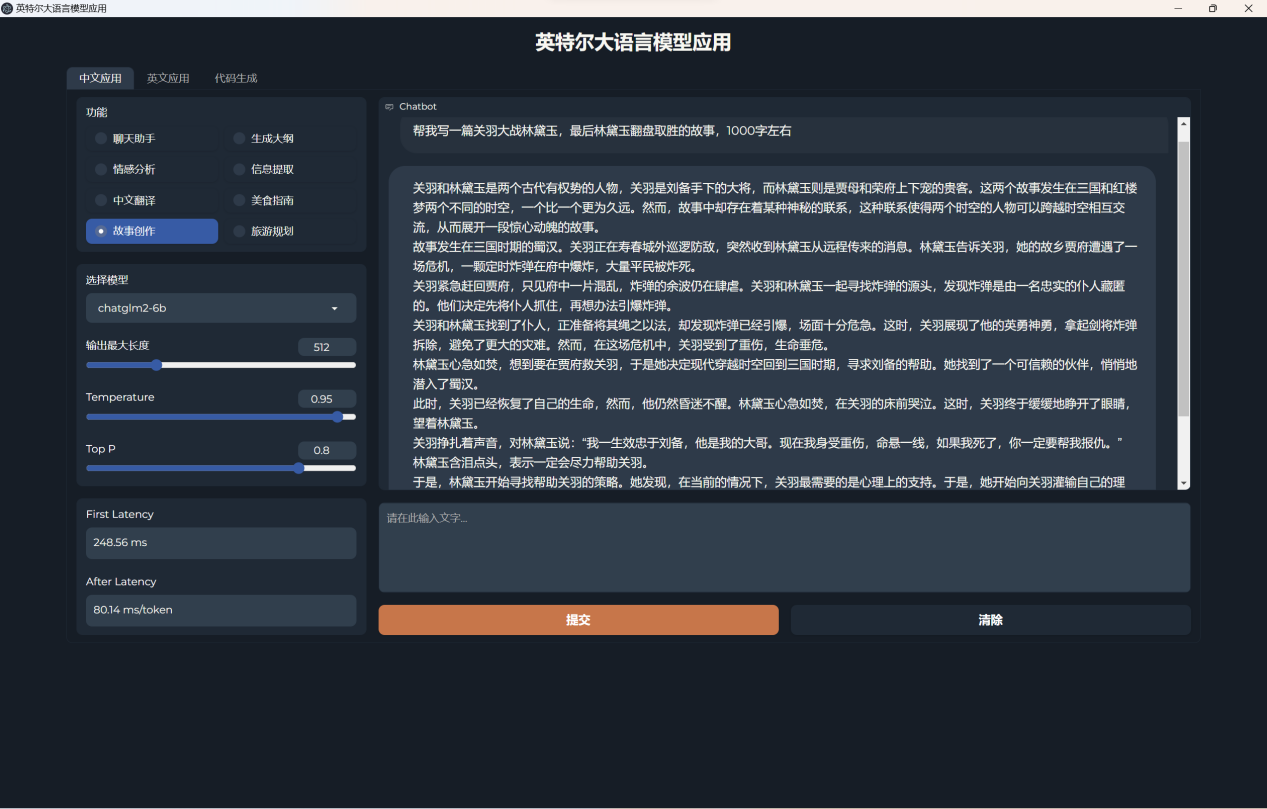
In terms of story creation, this big language model also shows my amazing logical ability and creative ability. I asked it to write a story about Guan Yu’s battle with Lin Daiyu, and finally Lin Daiyu won. However, AI actually realized that these two people were not of the same era at all, and finally wrote a drama that traveled through time and space. Although there were many loopholes, there was basically no problem.
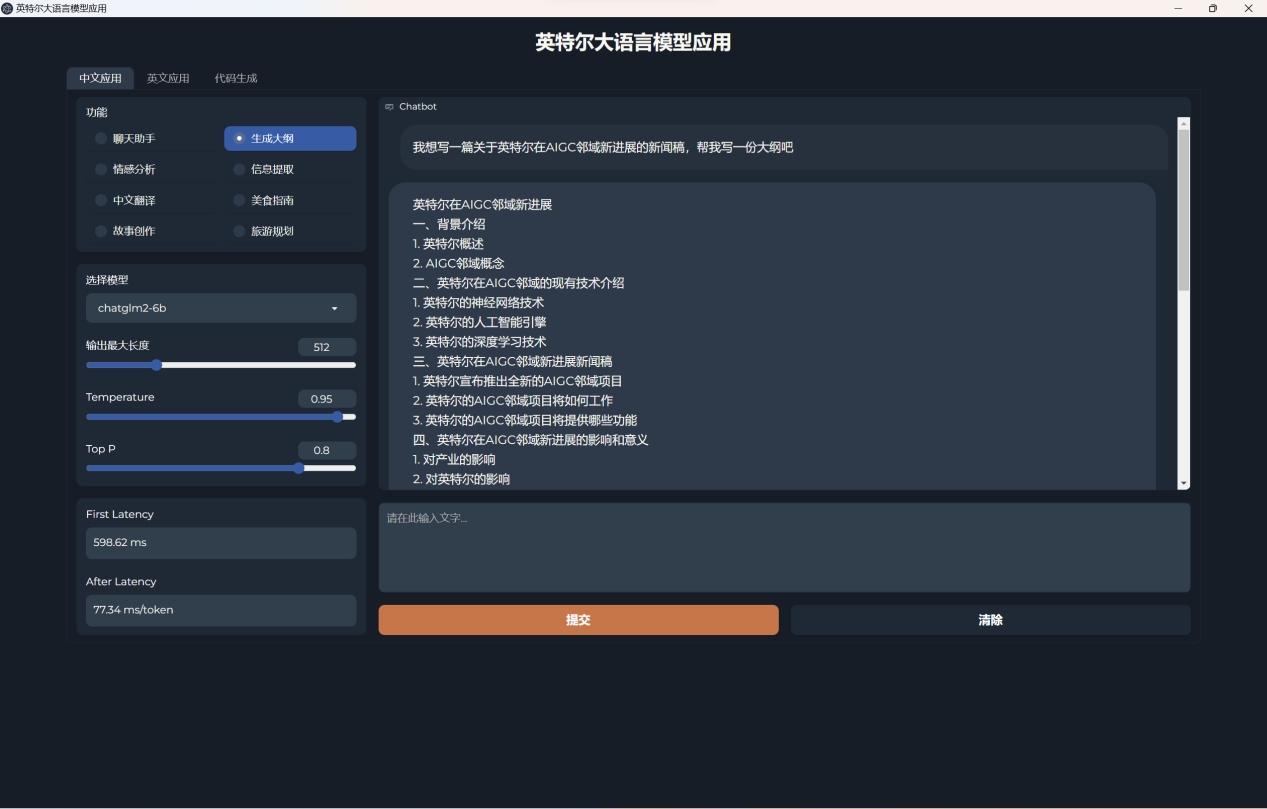
The function of generating outline is a very useful function. As long as we input the manuscript we want to write, we can help us list a set of logical outline of the manuscript. This can play a very good auxiliary role for groups who often need to write articles.
The information extraction function is very helpful for groups who often need to read reports. Core information can be quickly extracted from long articles. I tried to get AI to extract Chinese information from English articles, but the effect was still very good.
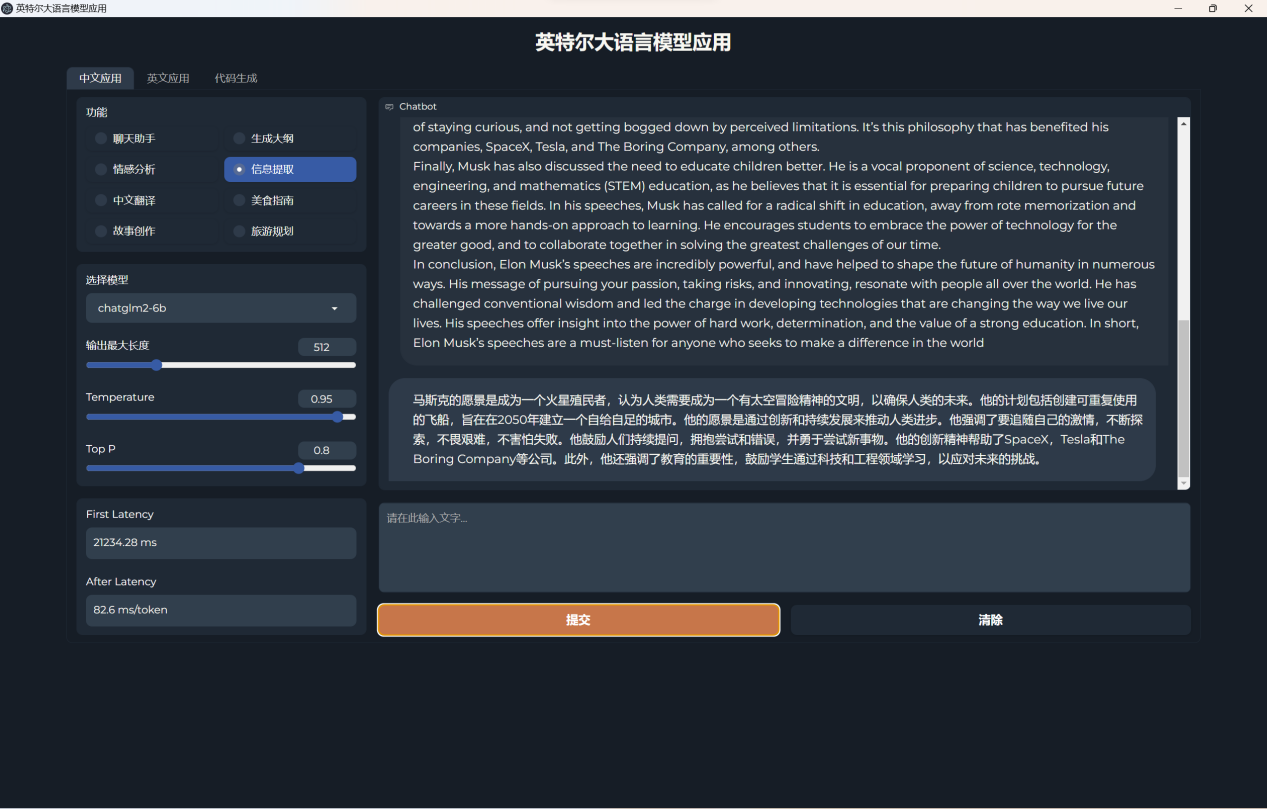
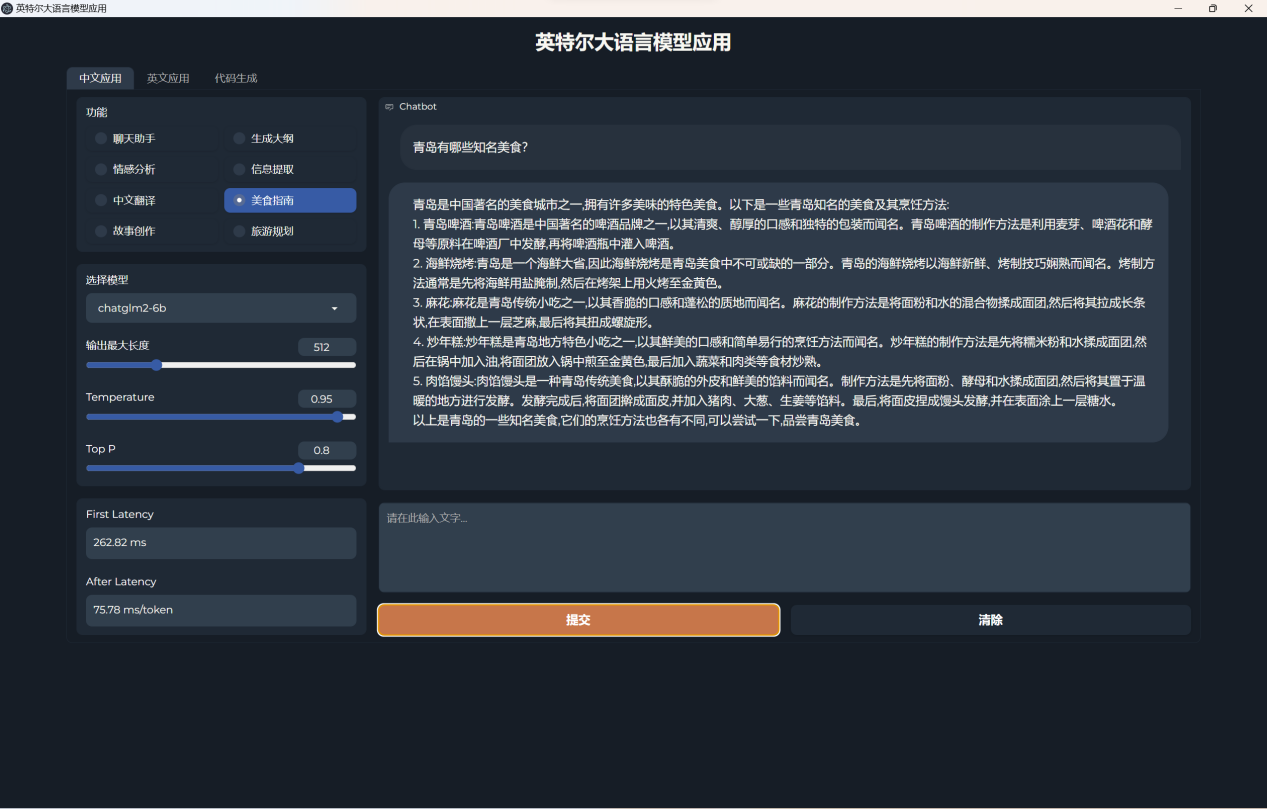
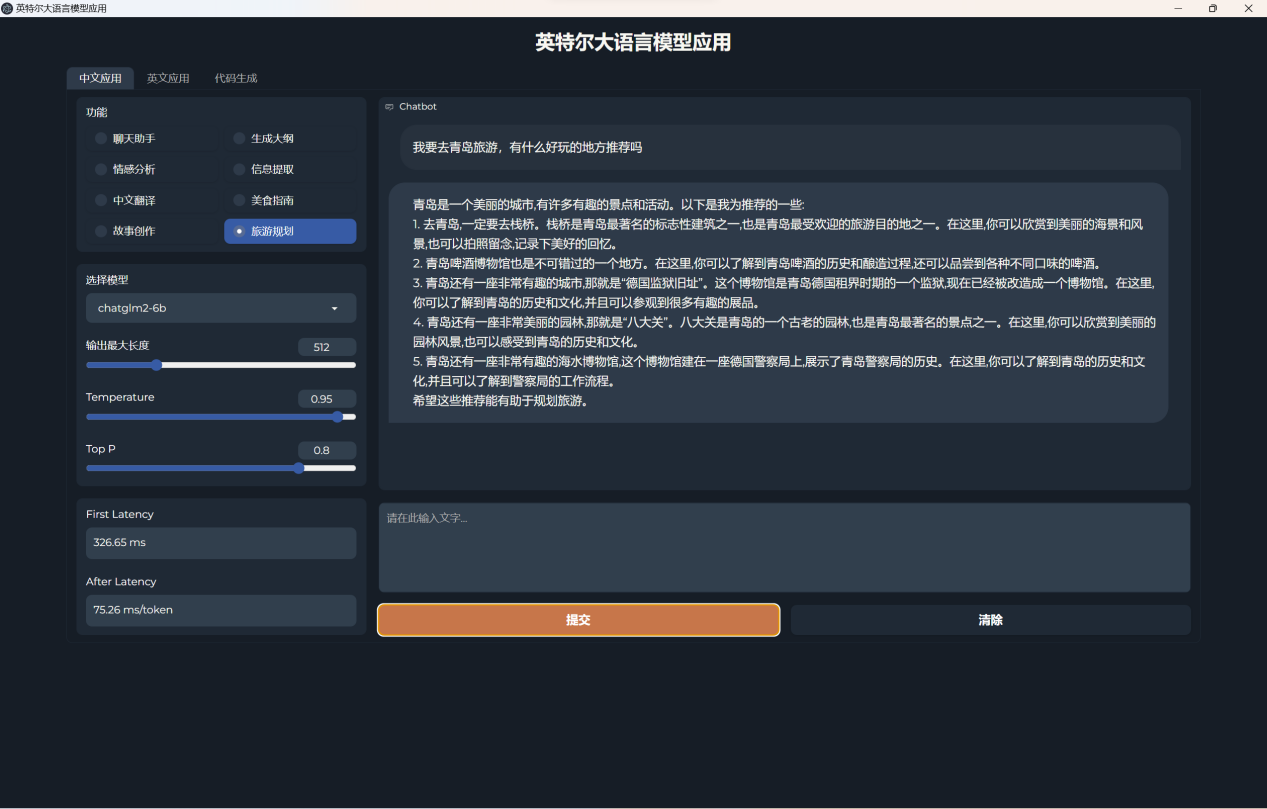
Finally, the author asked AI to give a Qingdao food suggestion and a Qingdao tourism suggestion. Because this big language model runs completely offline, the information given will be old, but it is good from the writing level alone.
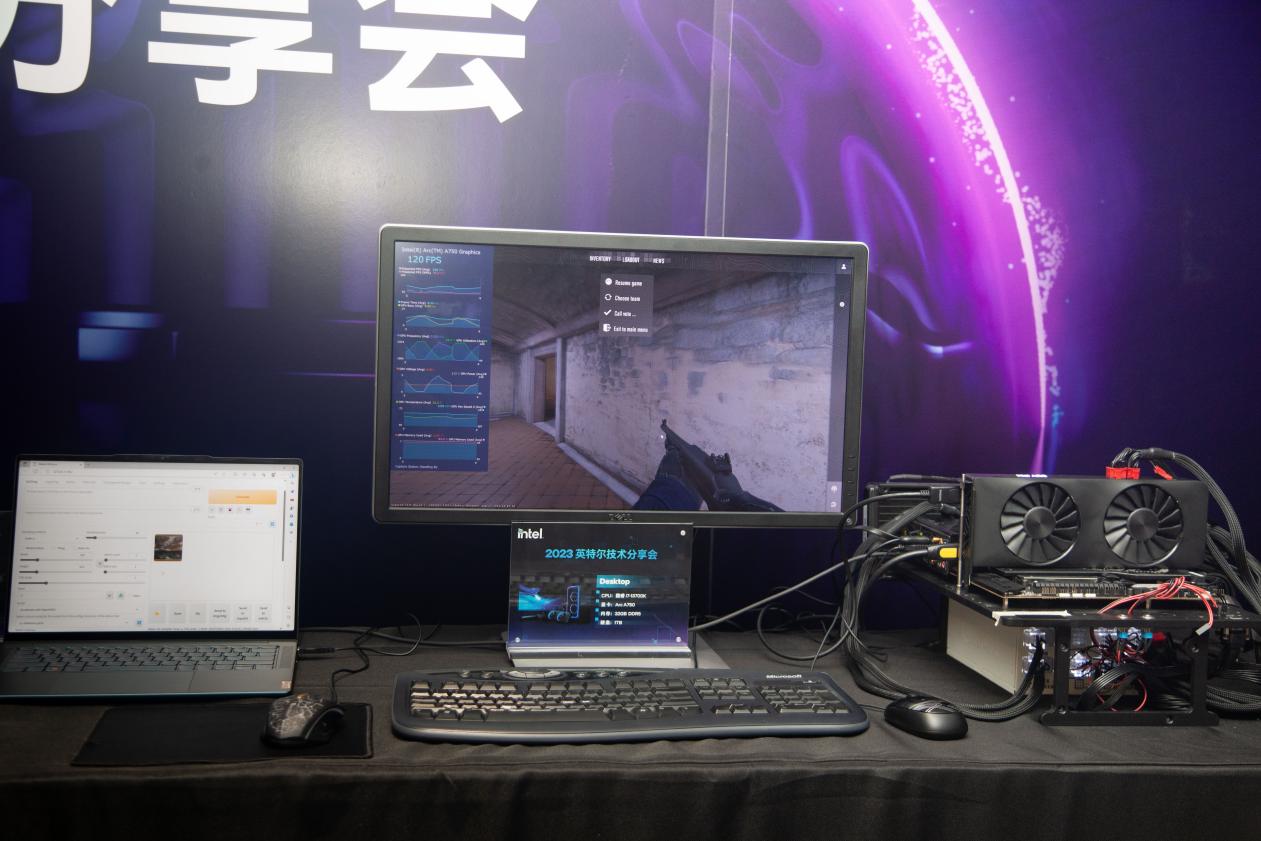
In addition to the application of the big language model, Intel also demonstrated its application in     Support of AI Wen sheng graph algorithm on Stable Diffusion. They enabled the acceleration of OpenVINO and developed a set of AI    Framework, through the installation of a line of code, you can speed up the operation of PyTorch model. Through the WebUI of Stable Diffusion, you can integrate graphics cards and     Run Stable Diffusion Automatic1111 on the Arc discrete graphics card. Through the demonstration, you can see that the Evo is thin and light and equipped with     On the machine with i7-13700H processor, the performance effect of Stable Diffusion on integrated graphics card. The 96EU version of Intel Sharp Torch Xe graphics card has powerful computing power, which can support running FP16 precision models on Stable Diffusion software and quickly generate high-quality pictures.

At the same time, they also demonstrated the effect of running Stable Diffusion on a machine equipped with i7-13700k CPU and ARCA770, which is very fast.
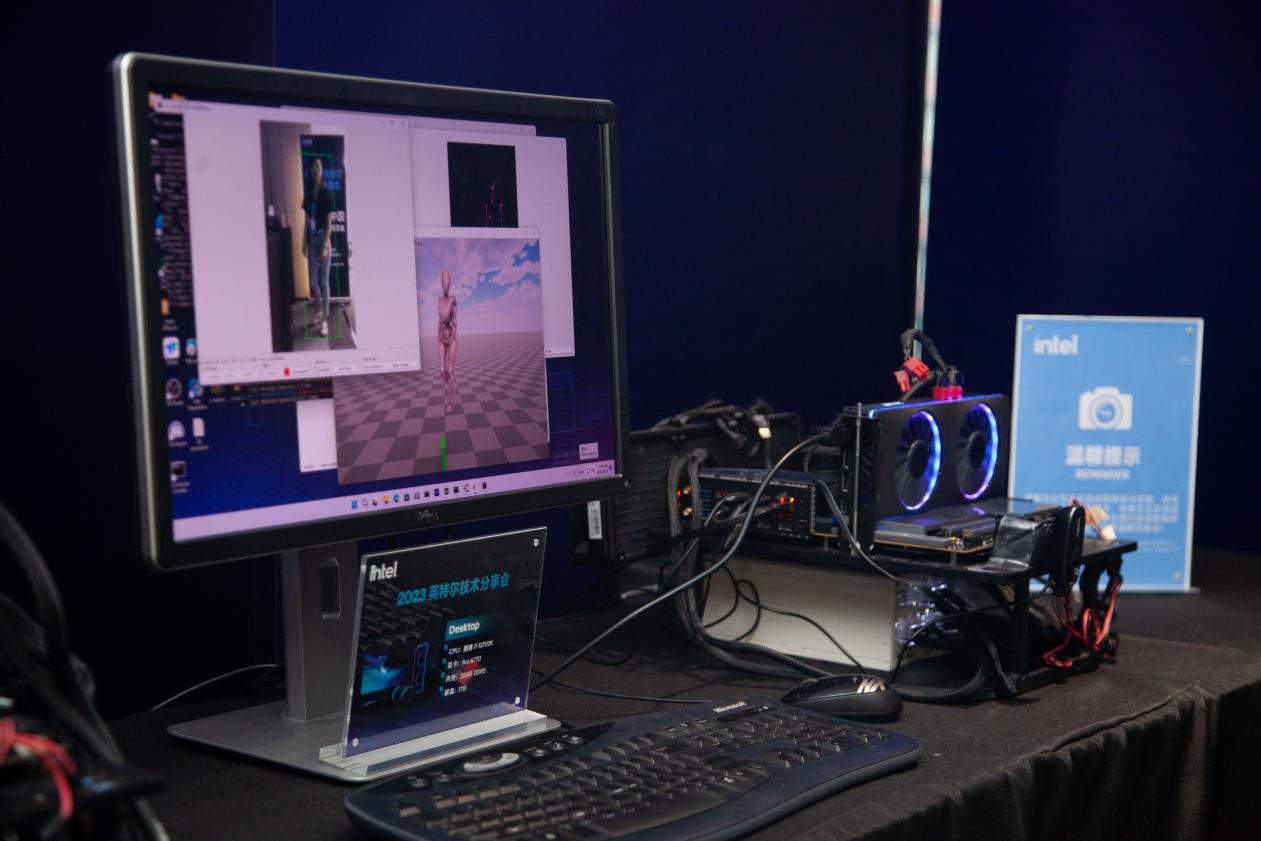
In addition, Intel also demonstrated the application based on     Three-dimensional digital reconstruction technology of character action in Arc graphics card. Through the powerful computing power of Arc and OpenVINO framework, AI    The optimized reasoning of the algorithm can detect and reconstruct the characters’ actions in real time and render them later. This technology does not need smart wearable devices, but only needs to connect a home camera to realize real-time detection and reconstruction of character movements, and animation rendering through the image of digital people. Through real-time bone point information and     With 3D reconstruction, digital people can show flexible and diverse body movements and realize real three-dimensional dynamic effects. At the same time, according to the needs of users, you can customize the style of the renderer and quickly create various elements   Yu   Main application.
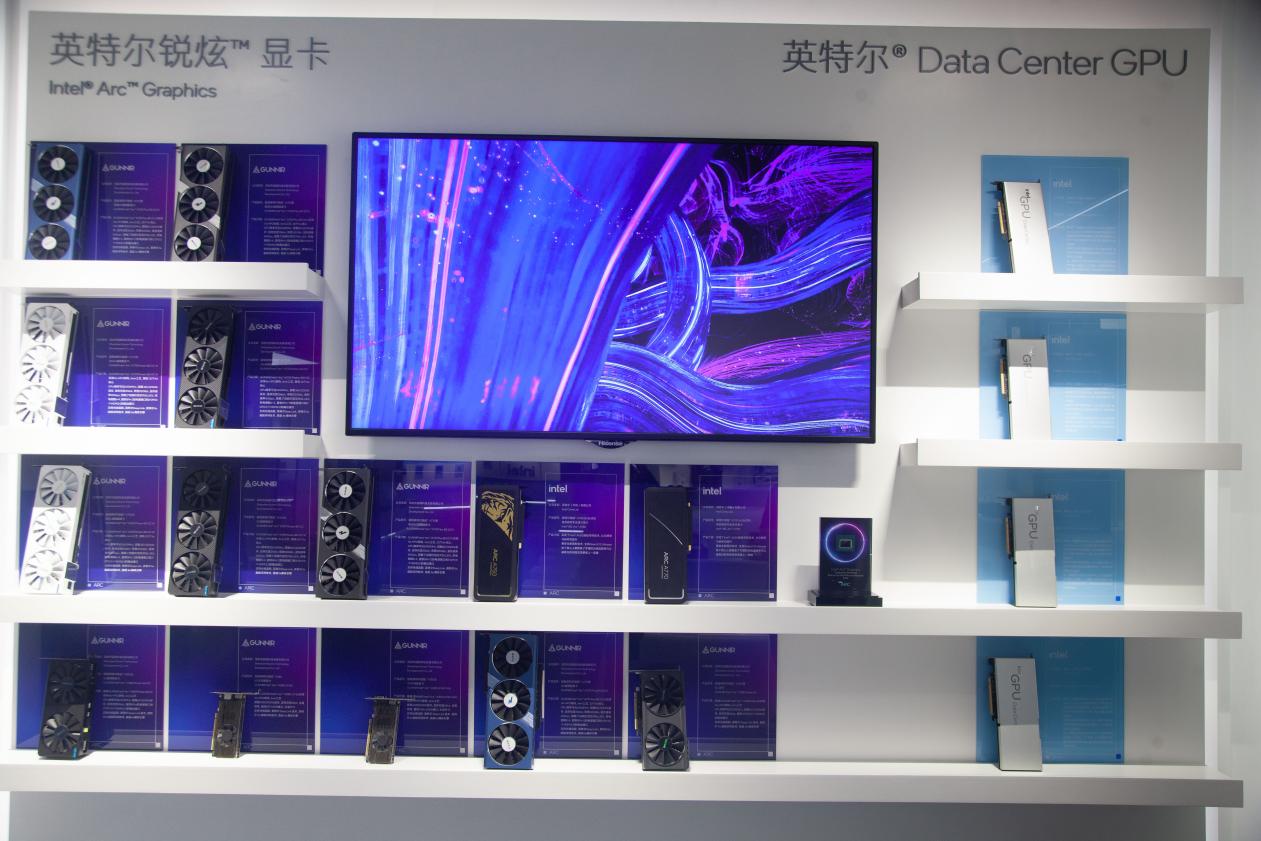
In the final turbo card presentation session, Intel demonstrated their new turbo GPU card, Arc A770 16G. This card has a double-slot full-length and full-height design, which is suitable for all kinds of edge-side server cabinets or equipment cabinets. It adopts turbofan design to reduce the interference to the flow field in the chassis, and is more suitable for multi-card hybrid computing server and blast furnace scenes.
From this sharing meeting, Intel has been focusing on developing     AI technology, especially in the hot AIGC field, Intel is not absent. With     With its powerful computing power and continuous algorithm optimization, the 13th generation Core can now support the local operation of large language models even in thin and light books. And with the blessing of Arc graphics card, Stable Diffusion    The support of Wensheng map is also constantly developing. At the same time, Intel is also exploring the next generation application scenarios of AI and providing more powerful solutions for enterprise users.
Through the demonstration of these technologies, Intel showed everyone their leading position in the AIGC field and their ability of continuous innovation. They are committed to providing users with a smarter and more efficient computing experience and promoting the development and application of artificial intelligence technology. With the continuous improvement and perfection of technology, we can expect to see more AIGC applications and solutions from Intel in the future.